Best Copper Frying Pans of 2026

Almost nothing sold as a copper frying pan in this price range is actually copper. It's aluminum with a copper-colored ceramic coating, and once you know that, the shopping gets simpler, because the pan lives or dies by what's sprayed on it. A good one heats fast, releases an egg without a fight, and wipes clean in seconds. A bad one turns breakfast into a scraping project and starts flaking by spring.

I keep a 10-inch one by the stove and reach for it whenever I want dinner without thinking. But over the past six months my team and I cooked in 14 of these pans, from 8-inch singles to a 9.5-inch square, and the spread was wider than I expected. Size mattered more than the marketing suggests, lids earned their keep more often than I thought, and cleanup separated the field fast.

What follows are the pans that held up to all of that — the ones we'd buy again with our own money, and the specific jobs each one is genuinely built for.

Our Top Picks

The 5 Best Copper Frying Pans of 2026

1

Gotham Steel Hammered 10-Inch Frying Pan Best Overall
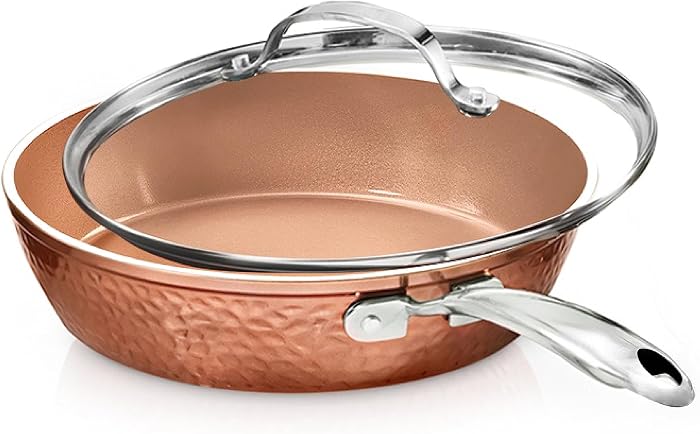
Gotham Steel 10 Inch Hammered Non Stick Frying Pans

Everyday 10-inch cooking

Our Score 91/100
Burners
Gas, smooth-top induction
Cleaning
Dishwasher safe
Diameter
10 inches
Oven Safe
500°F
View on Amazon

The hammered copper exterior is the reason this pan gets picked up off a shelf, and we think it earns the attention: it's the best-looking skillet in this group, and the dimpled surface hides wear that a smooth copper-colored pan shows after months of dinners. Under the finish it's a straightforward 10-inch aluminum pan with a glass lid, which happens to be the most useful combination here, wide enough for two pork chops or a four-egg omelet and lidded so you can steam broccoli without dirtying another pot.

Heat is where the Gotham makes its case. The aluminum body comes up to temperature quickly and holds an even surface at the moderate settings ceramic likes, so pancakes brown across the pan rather than in a dark ring in the middle. It's rated to 500°F, which means a stovetop sear can finish in the oven, and the coating releases eggs and browned meat with a swipe of butter instead of a puddle of oil.

You do pay the most for this one, and what that buys is the finish, the lid, and a 10-year limited warranty rather than a coating that outlasts the cheaper pans. The compatible-burner list also names gas and smooth-top induction, so if your stove has old coil elements, check before you order.

Worth Noting

  • Coating can scratch when metal utensils are used
  • Highest price in this group
Our Verdict

We recommend the Gotham Steel 10-inch as the best all-around copper pan here: even heat at the temperatures ceramic likes, a lid, and the best finish in the group.

Check Latest Price
2

Copper Chef 10-Inch Frying Pan with Lid Best Value 10-Inch Pan

Copper Chef 10 Inch Round Frying Pan With Lid

Light daily cooking

Our Score 90/100
Lid
Glass, included
Weight
1.9 lb
Burners
Electric coil, gas, induction
Diameter
10 inches
View on Amazon

At 1.9 pounds, this is the lightest 10-inch pan here, and the difference shows up at the end of a long cook, when you're tilting the pan to spoon sauce over a chop and your wrist is doing the work. Light doesn't mean flimsy: the aluminum body sits flat on the burner and comes up to heat fast, which is most of why it turns out eggs and burgers so well.

What we appreciate most is how little it asks of you. No seasoning step, no butter required for a fried egg, and the glass lid has a small vent so you can watch a frittata set without lifting it and losing the heat. It's listed as oven safe, so a pork chop can go from a stovetop sear to a finish in the oven, though the glass lid should stay out at high heat.

The handle and the lid knob are bare metal and warm up over a long sear, so keep a towel within reach. Otherwise this is the pan we hand to someone who cooks five nights a week and doesn't want to think about it, and it sits in the middle of this group on price: less than the Gotham, more than the two 8-inch pans.

Worth Noting

  • Nonstick release can fade after months of daily cooking
Our Verdict

Buy this one if you cook dinner nightly and want the lightest 10-inch pan here: quick, even heat, a vented lid, and less money than our top pick.

Check Latest Price
3

KOCH SYSTEME CS 8-Inch Copper Skillet Best 8-Inch Pan

KOCH SYSTEME CS Little Skillet with Lid

One-person meals

Our Score 89/100
Weight
2.2 lb
Burners
Electric coil, gas, induction
Diameter
8 inches
Oven Safe
450°F
View on Amazon

Eight inches is the size that ends up living on the burner in a one- or two-person kitchen, and this KOCH is the small pan we point people to. It handles two eggs, a single omelet, or a child's quesadilla without the wasted heat of an underfilled 10-inch pan, and it lists electric coil, gas, and induction, so it moves with you if you change stoves.

Five layers of ceramic over an aluminum body is more coating than most of this group spells out, and it shows in daily use: eggs release with nothing more than a swipe of butter, and cleanup is a rinse and a wipe. The glass lid is the part people skip and shouldn't, since it steams a portion of broccoli or finishes the top of a frittata without a second pan, and the skillet is oven safe to 450°F with the lid off.

What it won't do is dinner for four. Two chops at a time, one chicken breast, and anything saucy climbs the low walls, so treat it as the pan that handles breakfast and lunch rather than the one you reach for on a Sunday.

Worth Noting

  • Handle gets hot during longer cooking
  • Hollow handle collects water when hand washed
Our Verdict

We point anyone cooking for one or two to this 8-inch pan: the cleanest release among the small pans here, plus a lid and every burner type.

Check Latest Price
4

MICHELANGELO 8-Inch Frying Pan with Lid Best for First Kitchens

MICHELANGELO 8-Inch Frying Pan with Lid

First kitchens

Our Score 88/100
Weight
2.2 lb
Cleaning
Dishwasher safe
Diameter
8 inches
Oven Safe
450°F
View on Amazon

If you're setting up a first kitchen or adding a second pan for eggs, an 8-inch frying pan with a lid is a sensible place to start, and this Michelangelo covers the basics: light enough to lift one-handed while you slide an omelet onto a plate, oven safe to 450°F, and listed as dishwasher safe.

It heats quickly and cooks evenly, which is more than the price suggests. Scrambled eggs, fried onions, and pancakes all come out with an even color rather than a hot spot in the middle, and the glass lid lets you finish the top of an omelet or soften vegetables without flipping anything.

Where we part ways is the size. Eight inches is a breakfast pan, not a dinner pan: two chops crowd it, a whole chicken breast sits proud of the rim, and anything saucy climbs the walls. If that's the cooking you do, this is an easy, inexpensive way to do it; if you're feeding two people most nights, go up to 10 inches.

Worth Noting

  • Coating can wear through within months of steady use
Our Verdict

A light, inexpensive 8-inch pan with a lid that suits eggs, omelets, and one-person lunches, provided you treat the surface gently.

Check Latest Price
5

Toutrop 9.5-Inch Square Copper Pan Best for Pancakes and Bacon

Toutrop 9.5-Inch Square Copper Pan – Non-Stick Copper Square Frying Pan

Pancakes and bacon

Our Score 86/100
Shape
9.5-inch square
Burners
Electric coil, gas, induction
Cleaning
Dishwasher safe
Oven Safe
Yes
View on Amazon

Square is the whole reason to look at this one. A 9.5-inch square gives you the corners a round pan throws away, which means four strips of bacon lying flat instead of curling up the rim, two grilled cheeses at once, and pancakes that come off in rows rather than crowding the middle.

We like that the shape gives you somewhere to pour off fat, too: tilt the pan and the grease collects in a corner where a round pan would send it running around the rim. Nonstick is the strongest thing about it, with eggs sliding and pancakes releasing and cleanup amounting to a rinse, and it's listed for electric coil, gas, and induction as well as being oven and dishwasher safe.

Watch the corners on a round burner. They add real cooking area, but they also run cooler than the center, so food parked in a corner browns more slowly than food in the middle; start pieces in the middle and move them outward as they set. That's the trade for a pan that handles a family breakfast better than a round one of the same width.

Worth Noting

  • Corners are awkward for whisking and stirring
Our Verdict

Square corners are the draw: four strips of bacon fit flat, two grilled cheeses cook at once, and it works on any burner.

Check Latest Price

How We Tested Copper Frying Pans in Our Own Kitchens

We started by gathering every copper-toned nonstick skillet we could find in the 8- to 10-inch range, including one square 9.5-inch model, then filtered the list by what the listings actually promised: a ceramic coating, a lid, oven and dishwasher safety, and compatibility across gas, electric, and induction burners. Price counted, but only as a tiebreaker — a cheaper pan that cooked like an expensive one scored well, and a pan wasn't rewarded just for being cheap.

Fourteen pans made the cut, and we cooked in each of them for six months, in our own kitchens rather than on a lab bench. That meant Saturday morning eggs, weeknight chicken thighs seared skin-side down, onions sweated low and slow, grilled cheese pressed with a spatula, and pan sauces built on whatever fond was left behind.

Along the way we noted how the eggs released, whether the browning ran even across the surface or ringed at the edges, how the pan felt lifted one-handed with food in it, and whether the lid sat flush with no wobble. Cleaning got its own tally: we timed the hand wash, scrubbing at anything that stuck, then ran the pans labeled dishwasher-safe through repeated cycles to see whether the coating dulled or the rim discolored.

Durability got judged at week six rather than day one — whether the surface was still slick after dozens of washes, whether scratches appeared after ordinary spatula use, and whether the base still sat flat on the burner. Anything that started grabbing at week six didn't make the list, no matter how well it performed out of the box.

How to Choose a Copper Frying Pan

What the Copper Actually Is

Traditional copper cookware is a different animal: heavy, reactive, lined with tin or stainless steel, and in need of polishing to stay bright. The pans in this group are aluminum, which is light and conducts heat quickly, sprayed with a ceramic titanium coating and finished in copper. Copper Chef's own description points out that its surface won't oxidize or tarnish the way real copper does, which is the honest trade.

Buy one of these for easy release and quick cleanup, not for the thermal properties of copper. If you want a pan that browns like real copper, you're shopping in a different and much more expensive aisle.

Size and Shape Come First

Eight inches is a breakfast pan: two eggs, one omelet, a single chop, and not much more. Ten inches is the everyday size for two people, and the smallest pan that comfortably holds a family frittata or four chicken thighs. Square pans give up a little stirring ease in exchange for corner area that fits bacon, pancakes, and sandwiches.

Our advice is to pick the size around the meal you cook most, then decide whether you want a lid. A lid is the cheapest way to add steaming and omelet-finishing to a pan, which is why the 10-inch pans with glass lids here cover more meals than the bare 9.5-inch square.

Check the Burners Before the Price

Every pan here works on gas; the differences show up on electric coil and induction. Induction needs a magnetic base, and a pan can look right and still refuse to heat. Read the compatible-devices line rather than the title, because a pan that won't work on your stove is a bad buy at any price.

Oven ratings are the other number to check. The pans here run from 450°F to 500°F, and the glass lid that ships with a pan usually has a lower limit than the pan itself, so leave the lid out when you finish a sear under the broiler.

The Coating Decides How Long You Keep It

Ceramic nonstick is a wear item. It releases beautifully when new and degrades with high heat, metal utensils, abrasive sponges, and dishwasher cycles, which is why a pan's first month tells you very little about its third year. Cook at medium or below, use wood or silicone, wash by hand, and stack with a cloth between pans.

Spending more doesn't reliably buy a longer-lived coating, so budget for replacing a coated pan every couple of years rather than expecting a decade, and spend the difference on the size and lid you'll actually use.

Frequently Asked Questions

Final Verdict

Our pick is the Gotham Steel 10-inch hammered pan. It's the best-looking skillet here, it holds an even temperature at the moderate heat ceramic likes, and the lid plus a 500°F oven rating make it the one that covers the most meals. You pay a premium for the finish rather than for a longer-lived coating, and that's the honest trade.

Cooks on induction who want a small pan should look at the KOCH, which releases eggs more cleanly than anything else in its size. If you want the 10-inch size for less, the Copper Chef cooks just as well without the hammered look.