Best Electric Meat Slicers of 2026

A whole eye round on sale is the gateway. You bring it home planning a week of thin-sliced roast beef sandwiches, and a chef's knife turns it into ragged, uneven slabs that shred at the edges. That's the moment someone starts shopping for an electric slicer — and the moment they find out the machine only earns its counter space if it holds still, doesn't stall in cold meat, and comes apart easily enough to actually clean.

My team and I spent the past six months with 10 of them, and the spread is wider than the price tags suggest. Blade diameter turns out to matter more than wattage: a 10-inch blade clears a full-width roast or a block of cheddar, while a 7.5-inch model saves counter space but tops out at smaller cuts. The rest comes down to the built-in sharpener, the thickness dial, and whether the blade lifts out for washing.

The picks below are the ones we'd keep plugged in — for a single sandwich or a pound of deli meat at a time.

Our Top Picks

The 8 Best Electric Meat Slicers of 2026

1

BESWOOD 250 Best Overall
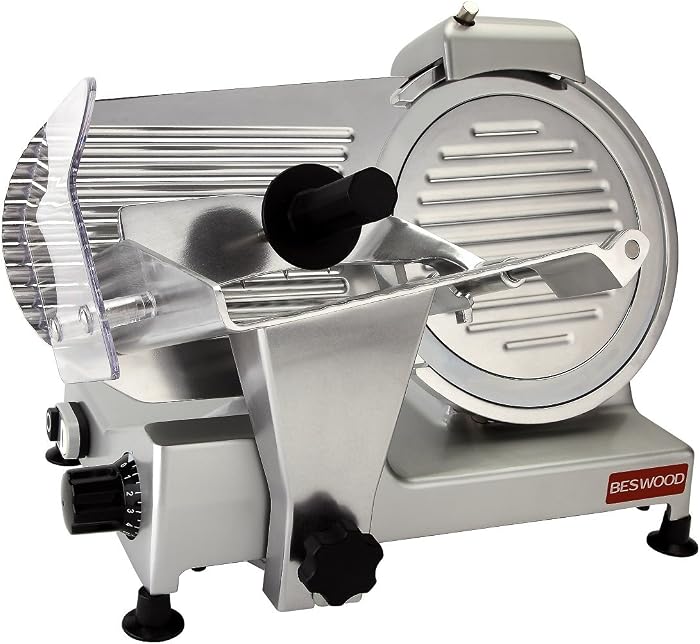
BESWOOD 10" Electric Deli Meat Slicer

All-purpose deli slicing

Our Score 92/100
Motor
240W
Weight
33 lb
Blade Size
10 inches
Certification
ETL listed
View on Amazon

Twenty inches deep and seventeen wide at 33 pounds, this is a machine you clear a space for and leave there. The trade pays off the first time a whole eye of round goes through without being cut down to fit. A 10-inch chromium-plated blade swallows a full ham, a pork loin, or a slab of bacon that a 7.5-inch slicer makes you halve first.

What keeps it at the top of this group is how little attention it asks for while it runs. The 240-watt motor is mid-pack on paper and the carriage is semi-automatic rather than a full sliding table, but the blade holds its speed through a chilled roast and the machine stays quiet enough that conversation doesn't stop. That combination is what separates a slicer you use on a weeknight from one that ends up in the basement.

Two sharpening stones ride on the head, so the edge gets touched up without taking anything apart, and the double illuminated switch and ETL listing speak to the same care in the electricals. Cleaning is the part you negotiate: the blade and carriage come off with a few knobs, and it is a deliberate job at the sink rather than a rinse. Crusty bread is not this machine's work.

If you slice a pound at a time, the Borlebbi further down takes less than half the counter and comes apart faster. This one is for the household that buys the whole roast, cures its own bacon, or fills a freezer with jerky. The 12-month warranty is the one number we want larger — LEM backs the BigBite for five years, and a machine this heavy deserves the same.

Worth Noting

  • Blade and carriage must come apart to clean
  • Not built for crusty bread
Our Verdict

We send most people to this one: a full 10-inch blade, quiet steady slicing, and enough mass to stay put, with cleaning as the honest trade.

Check Latest Price
2

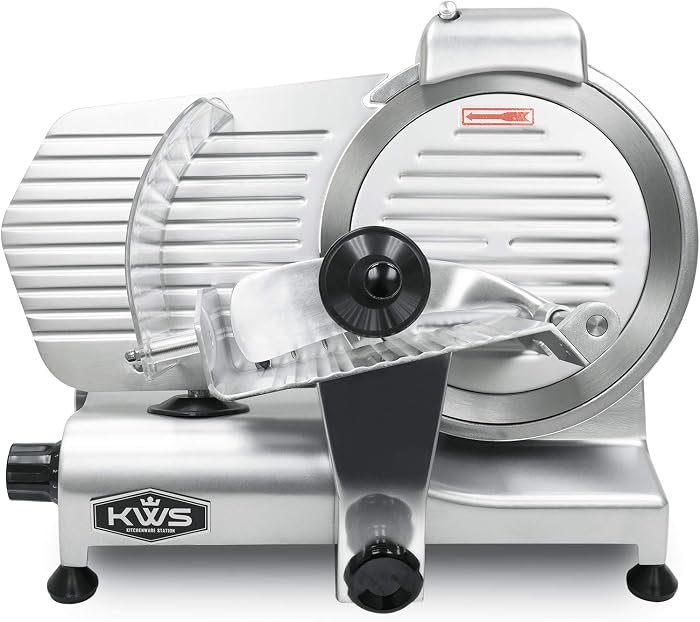
KWS 10NS Best for Big Batches

KWS KitchenWare Station 10NS Commercial 320W 10" Electric Meat Slicer

Big-batch slicing

Our Score 91/100
Motor
320W
Blade Size
10 inches
Certification
NSF and ETL
Thickness Range
Up to 14 mm
View on Amazon

Three hundred twenty watts, belt-driven, is the whole argument for this one. Where the 240-watt machines here start to labor when you lean into a dense cheese or a cold roast, the KWS holds its speed, and the slice coming off the far side is the same thickness as the first. That is what you pay for when you process a deer, run a small sandwich counter, or slice a week of lunch meat in one sitting.

The rest of the machine is built to match. The 10-inch blade is NSF certified, the unit carries an ETL listing, the food tray takes a piece up to about 7 by 7.5 by 5.5 inches, and the dial runs from tissue-thin to 14 mm — thick enough for hot-pot beef and jerky strips. A spare belt and a sharpening stone come in the box, which matters on a machine that might run an hour at a stretch.

Cleaning means deliberate disassembly: one hand screw for the tray, another for the blade cover, then the blade. None of it is hard, but it is not a rinse either, and at 37 pounds you are not carrying it to the sink. The one-year factory warranty on a machine near the top of this group's price range is the part we mind; buy it for the motor and accept that upkeep is the cost of the power.

Worth Noting

  • One-year warranty on a top-priced machine
  • Disassembly for cleaning is a chore
Our Verdict

Volume is the reason to buy it — a 320-watt motor that never labors, an NSF blade, and an ETL listing a small kitchen can point to.

Check Latest Price
3

Zomagas 10-Inch Best Value Full-Size

Zomagas 10-Inch – 10 Inch Commercial Meat Slicer 240W

Affordable full-size

Our Score 90/100
Motor
240W
Sharpener
Built-in
Blade Size
10 inches
Thickness Range
0 to 13 mm
View on Amazon

This is the least expensive way here to put a 10-inch blade on the counter, and nothing about the machine reads as a downgrade. A 240-watt motor turns a chromium-plated blade through a 0 to 13 mm range, and the body is aluminum rather than plastic, which is why it weighs just over 30 pounds instead of flexing under your hand.

The sharpener is built into the head: a few passes and the edge is back, with no blade to remove and no replacement to order. That choice is also the machine's one real compromise. The blade stays mounted, so the transparent guard, the carriage, and the tray are what come off for washing, and everything behind the blade gets reached with a cloth. We think that is a fair trade, and the payoff is a deli slicer with almost nothing to lose or misplace.

Where it earns a place over the bigger names is consistency for the money. Slices come off even and hold their thickness from the first cut to the last, the semi-automatic carriage travels smoothly, and the motor doesn't bog on cheese or a chilled roast. If you slice a few pounds a week and would rather spend on the blade than the badge, this is the one we point to.

Worth Noting

  • Blade stays mounted, so cleaning works around it
Our Verdict

Our value pick among the full-size machines: in-place sharpening and even slices for less than the other 10-inchers here.

Check Latest Price
4

LEM BigBite 10-Inch Best for Home Charcuterie

LEM BigBite 10" Electric Meat Slicer

Dedicated home charcuterie

Our Score 89/100
Motor
330W induction
Warranty
5 years
Blade Size
10 inches
Thickness Range
1 to 10 mm
View on Amazon

Five years of factory warranty is the reason to look here first. Nothing else in this group is backed that long, and it tells you what LEM expects the BigBite to survive: weekend after weekend of roasts, hams, and jerky, with replacement parts a call away rather than a new machine.

The hardware backs it up. A 330-watt induction motor — 0.43 horsepower — turns the 10-inch blade with a smoothness belt drives don't match, the aluminum housing sits on skid-resistant feet, and the graduated dial runs 1 mm to 10 mm, so prosciutto and a thick country ham both work. The carriage is the one place to check your ambitions: a full slab of bacon has to be halved before it fits.

Two things to know before you commit. At 39 pounds it is the heaviest machine here, and the paperwork is thin — the thickness dial can arrive tight, and the guidance on cleaning and sharpening the blade amounts to a paragraph. Work the sequence out once and it stops mattering, because the machine itself has none of the flex you feel in a plastic-bodied slicer.

What settles it is the arithmetic of keeping something. A five-year warranty and stocked parts mean this is the one here you buy once, and a 1 mm dial on an induction motor is what turns a weekend habit into a weekly one. If you slice a pound a month, spend less. If you bought a chest freezer to fill, this is the machine for it.

Worth Noting

  • Carriage too short for a whole slab of bacon
  • Thin guidance on cleaning and sharpening
Our Verdict

Buy the BigBite once and keep it — the five-year warranty and induction motor justify the weight and the spend.

Check Latest Price
5

Borlebbi 200W Best for Easy Cleaning

Borlebbi 200W – Meat Slicer Machine for Home

Quick cleanup

Our Score 88/100
Motor
200W
Blades
Two 7.5-inch removable
Safety
Child lock
Thickness Range
0 to 15 mm
View on Amazon

The blade comes off. So do the carriage, the food tray, and the pusher, and on a slicer that single fact decides whether you use it on a Tuesday or save it for a project. Borlebbi ships two 7.5-inch stainless blades, one serrated and one smooth, plus a stainless tray, and the top end lifts apart without a screwdriver.

We think this is the home machine to beat here for anyone who cooks rather than processes. The 200-watt DC motor is quiet and smooth, the 0 to 15 mm dial covers a sandwich slice and a thick-cut steak, and cheese blocks and sourdough both come out clean — the serrated blade is what handles the bread. Cleanup is a rinse and a wipe, not an evening.

Where it gives ground is at the extremes. A true prosciutto-thin slice takes patience and a steady hand, and the base is light enough that a textured counter lets it shift, so give it a smooth surface and check the feet before your first session. The chassis carries more plastic than the commercial machines here, and you can feel the difference when you press down.

For a home kitchen, though, the trade is a good one: two blades, easy cleaning, and a child lock for households with small hands. Buy it because you will actually wash it — that is the deli slicer feature that compounds, and it is the one most machines get wrong.

Worth Noting

  • Very thin slices take patience
  • Light base can shift on a textured counter
Our Verdict

It earns its spot by coming apart: two blades and a tray that lift out, so a home cook actually keeps it clean.

Check Latest Price
6

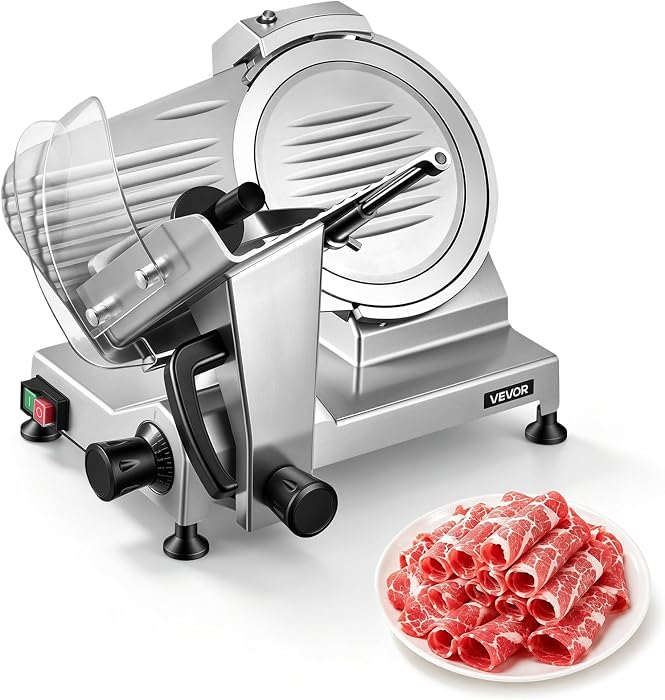
VEVOR Commercial 10-Inch

VEVOR Commercial Meat Slicer

Large roasts, value

Our Score 87/100
Motor
240W
Weight
34 lb
Blade Size
10 inches
Thickness Range
0 to 12 mm
View on Amazon

The manual is the weakest thing about this slicer, and it is worth saying up front: the machine arrives with a plastic baffle, a blade, and instructions that skip the parts you need — how the blade comes off, what to wipe and what to rinse. The hardware is simple enough to work out in an afternoon, and once you have, the machine asks almost nothing of you.

What you get for the effort is a lot of cutting. The 10-inch 45# carbon steel blade turns at 350 to 400 rpm, faster than most of this group, and the difference shows in how little pressure a chilled roast needs. The food pusher has raised spikes that bite into the meat instead of letting it skate, and the non-slip feet hold a 34-pound base still while the carriage travels.

We rate it the no-frills full-size option: knobs instead of switches, a sharpening stone built into the head, and 0 to 12 mm of adjustment that holds where you set it. The trade-offs are weight and upkeep — it stays where you put it, and cleaning around the blade takes more patience than on machines whose blades lift out. Check it over when it lands, since the finish is the part built to a price.

Worth Noting

  • Manual skips blade removal and cleaning
  • 34 pounds, so it stays where you put it
Our Verdict

For buyers who want a big blade and don't mind learning the machine solo, it's the no-frills full-size choice.

Check Latest Price
7

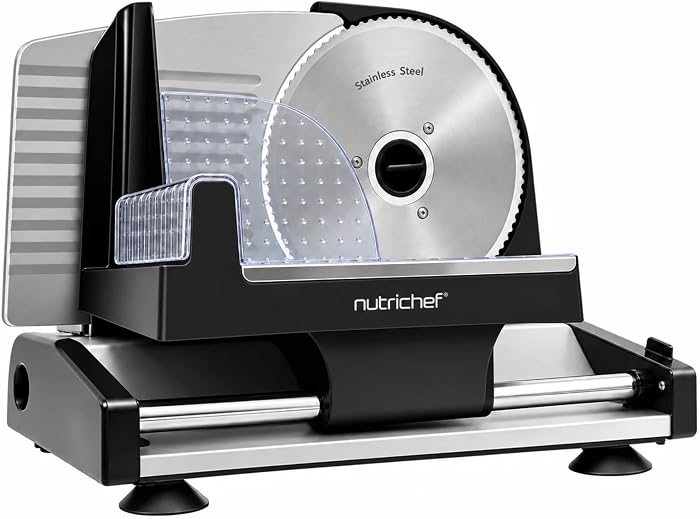
NutriChef 7.5-Inch Best for Small Kitchens

Nutrichef Electric Meat Slicer

Small kitchens

Our Score 86/100
Motor
200W
Weight
7.9 lb
Blade Size
7.5 inches
Thickness Range
0 to 15 mm
View on Amazon

Thin is where this one asks for patience. The dial runs 0 to 15 mm, but the last couple of millimeters are hard to hold — the setting can drift mid-cut and the food guard flexes if you press — so a shaved ham slice is a two-handed operation. For the sandwich-and-cheese end of home slicing it does the job without complaint, and the compact body is what makes it a realistic buy.

What it is: a 200-watt, 7.5-inch slicer that weighs under eight pounds and measures about 14 by 10 by 11 inches, so it goes back in a cabinet between sessions instead of claiming counter. The blade lifts out for washing, the pusher doubles as a guard, and nothing about the size gets in the way of slicing a block of cheese.

The plastic guard is the part that will decide how long it lasts, so treat the carriage gently and don't force a cold roast through it. Bread, cheese, and cooked deli meat are where it's happiest, and the size suits a household that buys meat in bulk and wants it sliced at home. If you slice weekly and hard, spend more; if you slice occasionally and want the cabinet space back, this is the sensible start.

Worth Noting

  • Thin slices drift and need a second pass
  • Plastic guard is the weak point
Our Verdict

Our pick for occasional, small-batch slicing where cabinet space counts for more than paper-thin precision.

Check Latest Price
8

VEVOR 7.5-Inch

VEVOR Meat Slicer

First slicer

Our Score 85/100
Motor
200W
Weight
8.4 lb
Blade Size
7.5 inches
Thickness Range
0 to 15 mm
View on Amazon

The cutting edge sits a millimeter below the guard on this one, so the exposed face of the machine is not the edge itself. That is a small piece of engineering with a real payoff in a kitchen, and it pairs with a spiked pusher and suction feet to make a compact slicer that behaves on a counter a 34-pound commercial unit can't share.

Two SUS420 blades come in the box, serrated fitted and smooth alongside, and the blade, pusher, and slide-bar extension all lift off for washing. We like that the serrated one is already mounted, because bread is the job a small slicer gets handed most often. Thickness runs 0 to 0.6 inches on a plain knob that stays where you leave it.

The motor is the honest limitation: 200 watts at 70 to 100 rpm is a slow blade. Slow is fine for cooked deli meat, ham, and a baguette, and less fine for a hard-frozen block, which is where the 10-inch machines earn their keep. At 8.4 pounds and about 15 inches long it lives in a cupboard, comes out for a session, and goes back.

Where it earns its place is the bottom of this group's price range, with more in the box than the other budget machine: two blades, a UL listing, and a guarded edge. If you slice a pound at a time for sandwiches or hot pot, it does the work. If you're breaking down a deer, look at the full-size machines above.

Worth Noting

  • Slow blade rewards a light, patient hand
Our Verdict

The right first slicer for most kitchens: two blades, a covered edge, and a UL listing at the bottom of this group's price range.

Check Latest Price

How We Tested 10 Electric Slicers Over Six Months

We started by pulling every electric slicer listed at the major retailers and narrowing by blade diameter, motor rating, and whether the blade lifts out for washing — three things that decide how often a machine actually gets used. From that pool we bought 10 and ran them for six months, mixing compact 7.5-inch models aimed at home kitchens with 10-inch units heavy enough for a small shop. Price varied considerably; what each machine gave back for that money varied more.

Every slicer went through the same sessions. I chilled an eye round overnight and cut it at three dial settings, checking the real thickness with calipers against what the dial claimed, then ran a block of cheddar and a loaf of sourdough through at those same settings to see which machine tore the cheese or dragged the crust. I pushed a partially frozen roast into each blade to find where the motor bogged down, and watched the feet during a twenty-minute run to see whether the base crept across the counter. Since a dull blade ruins everything downstream, I used each built-in sharpener exactly as the manual instructed and sliced again to see whether it changed the cut.

After each session I broke the machine down and washed it, timing the job and noting whether the blade came off without a fight or food hid in the carriage. I read every manual cold before assembling, because a slicer you can't put together is one you won't use. Over six months we tracked whether carriages loosened, blades dulled, or motors began to labor, and we measured each machine's counter footprint and weight for anyone who has to lift it out of a cabinet.

How to Choose an Electric Meat Slicer

Blade Size Is About What Fits, Not Just Power

Blade diameter gets the marketing, but the carriage opening decides whether a whole ham or a full slab of bacon goes through in one piece. A 10-inch machine like the LEM BigBite still needs a slab of bacon halved before it fits, and a 7.5-inch slicer is genuinely enough for sandwich meat, cheese blocks, and loaves.

So measure the widest thing you plan to slice, not the blade. Buy a 10-inch machine only if you bring home whole roasts and hams; otherwise you're paying for a blade that never sees the food it was designed for.

Match the Motor to the Meat

Watts are a rough guide, not the answer. What you feel at the handle is torque and blade speed: the 320-watt KWS and the 330-watt LEM hold their speed through a cold roast or a dense cheese, while a 150-watt machine tears at the same cut and leaves ragged edges.

For cooked deli meat, ham, bread, and firm cheese, a 200-watt home machine is enough. Save the bigger motors for hard-frozen blocks, whole muscles, and sessions measured in hours rather than pounds.

Cleaning Decides How Often You Slice

Every deli slicer gets greasy, and the machine you keep using is the one whose blade lifts off. Removable-blade designs like the Borlebbi come apart in seconds; fixed-blade designs such as the Zomagas keep the edge covered and make you clean around it.

Plan on hand-washing the blade and carriage after each session rather than trusting a dishwasher claim, and let that routine break a tie between two machines. A slicer that takes ten minutes to clean gets used less than one that takes two, whatever the motor says.

Weigh the Counter Space Before You Buy

Full-size machines run 30 to 40 pounds and take a footprint close to 20 by 17 inches. Compact home models land near 10 pounds and about 14 by 10 inches, which means only the compact ones can go back in a cabinet.

Decide up front whether the slicer gets a permanent spot. A 34-pound machine that lives in a cupboard behind the stand mixer is one you stop using, so leave clearance behind the carriage for a roast to travel its full stroke.

Safety Is a Design Question

A spiked food pusher, a guard that covers the blade's exposed face, and a switch you can't bump accidentally are what make a slicer safe to own day to day. Listings help you buy: ETL or UL covers the electricals, NSF covers sanitation on a food-contact machine.

Then keep one habit. Unplug it before you touch the blade, dry it immediately after washing, and never hand-feed a piece too short for the pusher — a wet hand on a sharp edge is how these machines bite.

Frequently Asked Questions

Final Verdict

Start with the BESWOOD 250. It is the most complete slicer here — a full 10-inch blade, quiet running, even slices, and ETL electricals — and the 12-month warranty is the only place it comes up short.

If you process meat in volume or run a small kitchen, the KWS 10NS and its 320-watt motor are the upgrade worth paying for. And if cleaning is the reason your last slicer stayed in the cupboard, the Borlebbi's removable blades change that calculation entirely.