Best Espresso Machines for Home of 2026

A home espresso machine is a small act of faith. You are handing over real money on the belief that a pump, a heating element, and a group head will hold the same rhythm every morning — no weeping portafilter, no sputtering steam wand, a second shot that tastes like the first. When that holds, you get café drinks in your pajamas for the price of beans.

I've been pulling shots at home for years, and the numbers on the box are mostly noise; a machine stamped 20 bar still pushes about 9 bar through the puck. What actually separates one machine from another is temperature stability, grind consistency, and a wand with enough dry steam to texture milk in under a minute. My team and I spent eight months with 11 machines to see which ones deliver that.

Two things surprised me: a built-in grinder saves counter space but locks you into that grinder for the life of the machine, and footprint is worth measuring before you buy, not after. Every pick below pulled a repeatable shot, stayed dry, and was hot before I finished tamping.

Our Top Picks

The 6 Best Espresso Machines for Home of 2026

1

Breville Barista Express Best Overall

Breville BES870XL Barista Express Espresso Machine

All-in-one brewing

Our Score 90/100
Height
15.9 in
Counter Footprint
12.5 x 13.8 in
Integrated Grinder
Conical burr
Temperature Control
PID
View on Amazon

On the Barista Express, the grinder is built into the machine and doses straight into the portafilter, so the whole routine—beans, ground coffee, shot, milk—happens in one footprint. That is the feature that makes it a genuine one-purchase setup rather than a machine plus a separate grinder plus another patch of counter.

We recommend it first for that reason: it gives you a complete workflow without making you shop for a grinder separately, and the PID temperature control and low-pressure pre-infusion give you a more stable starting point than a basic pump machine. The steam wand is manual, so you can learn microfoam rather than press a milk button. It still expects you to dose, tamp, and watch the shot; it is not a pod machine.

The included Razor dose-trimming tool and integrated tamper are small helpers that make the first week less fiddly. If you already own a capable burr grinder, the Gaggia Classic E24 is the more traditional place to spend the money; the Breville's advantage is that it makes the grinder part of the same purchase.

Worth Noting

  • Tall body needs cabinet clearance
  • Long-term durability is uneven
Our Verdict

We recommend the Barista Express first because it turns whole beans into a shot and steamed milk without a separate grinder, and it gives beginners enough control to improve.

Check Latest Price
2

Gaggia Classic E24 Best for Traditional Espresso

Gaggia RI9380/46 E24 Espresso Machine

Traditional espresso

Our Score 89/100
Width
9.5 in
Water Tank
2.1 liters
Portafilter
58mm commercial
Pump Pressure
9 bar
View on Amazon

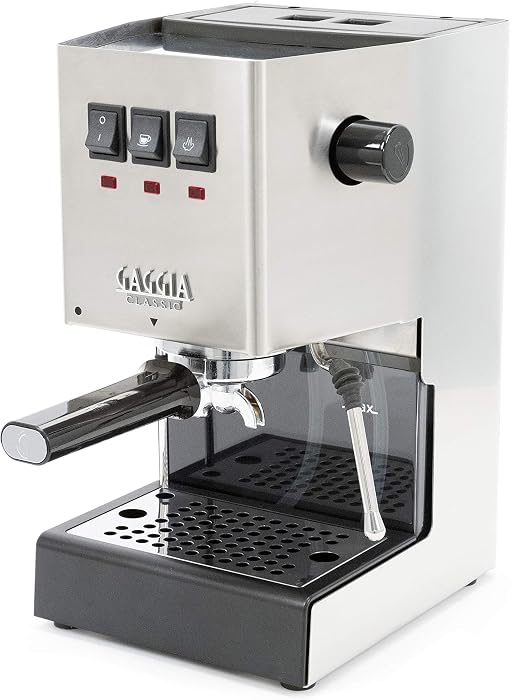
The 58mm commercial portafilter and 9-bar extraction are the two facts that define the Gaggia Classic E24, and they are why we recommend it to someone who wants to learn on standard espresso equipment. You grind separately, dose, tamp, and pull against a commercial-style group. That is a different pleasure from a one-button machine: more variables, more control, and a machine you can service rather than replace.

The three-way solenoid valve and commercial steam wand are the practical upgrades. The solenoid releases pressure after the shot, which makes the puck easier to knock out and the machine easier to clean; the wand gives you more control for microfoam than a panarello frother. The 2.1-liter tank and 20-pound steel body keep it stable, and the 9.5-inch width is compact for a 58mm machine.

The catch is that the Gaggia is only the machine. You need a burr grinder capable of espresso, and that is a separate purchase and a separate patch of counter. The 9-bar path is also less forgiving than a preset machine, and some units develop leaks, so buy from a seller with clear support and keep up with maintenance. We see it as a long-term machine, not a shortcut.

Worth Noting

  • No grinder included
  • Some units develop leaks
Our Verdict

We recommend the Gaggia Classic E24 for the espresso drinker who already owns a good grinder and wants a traditional 58mm machine that can be serviced and upgraded.

Check Latest Price
3

De'Longhi Classic Signature Best Budget with Presets

De'Longhi Classic Signature Espresso Machine

Easy daily espresso

Our Score 88/100
Width
13.98 in
Frother
Dual mode
Presets
Single and double
Pump Pressure
15 bar
View on Amazon

The Classic Signature is the easy-button machine of this group: a 15-bar pump, a pressure gauge, and saved single or double presets, all for a budget price. We recommend it to the beginner who wants a decent espresso routine without weighing every dose. The dual-mode frother handles dairy or plant milk, and the rapid Thermoblock heat-up keeps the morning moving.

The presets are the real convenience. You can save a volume you like and repeat it, then use the gauge as a visual check while you learn how grind and tamp change the flow. The 13.98-inch width means it needs a proper counter spot, not a sliver, but the 9.3-pound body is light enough to move when you clean behind it.

The weak spot is temperature. The coffee can arrive lukewarm, especially in a milk drink, and the brew speed is not the most consistent. We see it as a machine for easy daily espresso rather than precise light-roast work. If temperature control matters more, the CASABREWS Ultra is the better fit; if you want traditional 58mm gear, the Gaggia is the upgrade.

Worth Noting

  • Can brew lukewarm coffee
  • No built-in grinder
Our Verdict

We recommend the De'Longhi Classic Signature for a beginner who wants a low-fuss machine with preset shots, a pressure gauge, and a frother that handles dairy or plant milk.

Check Latest Price
4

CASABREWS CM5418 Best Compact

CASABREWS CM5418 Compact Espresso Machine with Milk Frothing Steam Wand

Small kitchens

Our Score 87/100
Width
5.47 in
Water Tank
34 oz
Portafilter
51mm
Pump Pressure
20 bar
View on Amazon

At 5.47 inches wide, the CM5418 is the narrowest machine here. It slides into the gap beside a fridge or takes the corner of a small apartment counter without becoming the whole kitchen. The 34-ounce water tank is removable, and the pressure gauge sits on the front where you can see it while pulling a shot.

We recommend it when space is the constraint. The 20-bar pump, 51mm portafilter, and steam wand are standard compact-machine hardware, and the gauge helps you learn how grind and tamp affect the flow. It is not a prosumer machine, but it is a sensible first step that does not ask for a whole counter.

The limitations are the ones that come with the size. The 51mm basket has less room for error than a 58mm commercial basket, and the 34-ounce tank needs refilling more often if you make several milk drinks. Reliability is uneven: some units run for years, others stop working. Buy from a seller with a clear return window and keep the warranty paperwork.

Worth Noting

  • Small 34-ounce water tank
  • Long-term reliability is uneven
Our Verdict

We recommend the CASABREWS CM5418 when counter space is tight and you want a compact 20-bar machine with a pressure gauge and a real steam wand.

Check Latest Price
5

CASABREWS Ultra Best for Feature-Focused Brewing

CASABREWS Ultra Espresso Machine

Feature-focused brewing

Our Score 86/100
Water Tank
73 oz
Portafilter
58mm
Pump Pressure
20 bar
Brew Temperatures
4 settings
View on Amazon

The Ultra's LCD and four brew-temperature settings are the first things you notice, and they are unusual at this level. You can tune the machine toward darker or lighter beans instead of accepting one preset, and the screen walks you through steam, hot water, and programmed shots. The 58mm portafilter and 73-ounce tank are the other reasons it feels more serious than a starter machine.

The 20-bar pump and steam wand are standard hardware, but the temperature steps and 58mm basket are the meaningful upgrades. The 13.6-pound body is light enough to move if you need the counter, though the 10.31-inch width and 12.9-inch height still need a dedicated spot. The bigger tank means fewer refills, and the 58mm basket gives you more room for an even puck.

We like the Ultra as a midrange pick for someone who wants to tinker without jumping to premium prices. The catch is that it is a newer design, so keep the warranty handy and do not expect the same long service record as the Gaggia. It also needs a separate espresso grinder; the built-in-grinder convenience belongs to the Breville and Gevi. If you want the safest traditional upgrade, the Gaggia is the more proven choice.

Worth Noting

  • No grinder included
Our Verdict

We recommend the CASABREWS Ultra for the tinkerer who wants a 58mm portafilter and adjustable brew temperature without jumping to premium prices.

Check Latest Price
6

Gevi Espresso Machine with Grinder

Gevi 20 Bar Espresso Machine with Grinder & Steam Wand for Latte Cappuccino

Budget all-in-one

Our Score 85/100
Grinder
30-setting conical burr
Water Tank
2.3 liters
Portafilter
58mm
Pump Pressure
20 bar
View on Amazon

The Gevi's pitch is simple: a built-in conical burr grinder with 30 settings, a 58mm portafilter, a 20-bar pump, and PID temperature control in one cabinet. That combination usually costs more. The 2.3-liter tank is generous, and the dual-wall baskets give you a fallback if your grind is off.

The grinder is the main event. Thirty steps is enough to move from a coarse start toward an espresso setting, and the 58mm basket is the same commercial size used by the Gaggia and CASABREWS Ultra, so accessories are easier to share. The 2.3-liter tank means fewer refills, and the PID control is the detail that separates it from a basic pump machine.

We see it as a budget all-in-one for someone who wants the grinder and the machine in one purchase and accepts a shorter track record than the Breville. The built-in grinder is also the upgrade path: if it fails, you cannot swap it for a separate grinder the way you can with the Gaggia. That is the trade-off for the convenience and the lower price.

Worth Noting

  • Tall 16.53-inch body needs clearance
  • Built-in grinder limits future upgrades
Our Verdict

We recommend the Gevi for the budget shopper who wants a built-in grinder and 58mm portafilter, as long as they accept a shorter track record and a machine that is not as proven as the Breville.

Check Latest Price

How We Tested 11 Espresso Machines Over Eight Months

We built the shortlist from manufacturer specs, retailer listings, and the models that keep surfacing in home-barista threads, then filtered by price band, counter footprint, and the features that genuinely change a morning: a real steam wand, a removable water tank you can carry to the sink, a pressure gauge, and in a couple of cases a built-in grinder. That left 11 machines, which we ran for eight months.

Each one lived on a kitchen counter and got used the way a home machine actually gets used — a single shot before work, two milk drinks on a weekend morning, and a month in a smaller kitchen where every inch of footprint counted. We timed heat-up from cold with a stopwatch, took the temperature of the espresso in the cup with a probe, and weighed dose and yield to see whether the same settings repeated day to day. After a week of daily use we pulled the drip tray and ran a finger under the group head and around the wand looking for leaks.

Consistency got the hardest look, because it's what quietly breaks: we pulled three shots back to back and compared color, timing, and taste. Reliability and durability we judged by living with each machine daily for at least three weeks — wiping down the stainless, checking the wand tip for crusted milk, watching whether the gauge drifted. We also left every machine out on the counter for weeks, since appearance matters when something sits there permanently. Value ran underneath all of it: what a machine could do set against what it cost, and whether a built-in grinder earned the space it took. Then we asked the blunt question — would we buy this again with our own money, and would we send the link to a friend?

How to Choose a Home Espresso Machine

Decide on the grinder first

If you do not already own a burr grinder that can grind for espresso, the grinder is the first decision, not the machine. An integrated grinder like the one on the Breville Barista Express or the Gevi saves counter space and a separate purchase, but it also ties the grinder's lifespan to the machine. A separate grinder gives you an upgrade path and often a better grind for the money.

Choose integrated when you want one purchase and a compact workflow. Choose separate when you already have a good grinder or want to upgrade one piece at a time; the Gaggia Classic E24 is the clearest example of a machine that expects you to bring your own grinder.

Match the controls to your patience

Manual and semi-automatic machines reward attention. You dose, tamp, watch the flow, and adjust the grind; the Gaggia's 9-bar, 58mm setup is the most traditional example here. Preset machines such as the De'Longhi Classic Signature trade some control for repeatability: you save a shot volume and press a button. Neither is better in the abstract.

Be honest about your mornings. If you want a latte before you are fully awake, presets and a dual frother are a real convenience. If you want to learn extraction, temperature control and a commercial-style basket give you more to work with. The CASABREWS Ultra sits in the middle with four brew temperatures and programmed shots.

Measure the counter, not just the machine

Footprint is only half the fit. Height matters under upper cabinets, and water-tank access matters every few days. The Breville Barista Express is 15.9 inches tall; the CASABREWS CM5418 is only 5.47 inches wide. A narrow machine can still be tall, and a short machine can still need clearance to lift the tank.

Measure the width, depth, and height of the spot you have in mind, then add room to fill the tank and load beans. If the machine sits under a cabinet, check that you can remove the tank or pour from a pitcher without pulling the machine out. A dedicated corner is easier than a shared prep space.

Plan for milk and maintenance

A steam wand gives you control over microfoam; a dual-mode frother is more forgiving, especially with plant milk. If you drink milk drinks daily, the wand is worth prioritizing. If you drink espresso mostly straight, put the money into temperature stability and a good grinder instead. The Gaggia's commercial wand and the De'Longhi's dual frother are different answers to the same job.

Maintenance is part of ownership. Plan on descaling, cleaning the group and baskets, and backflushing if the machine has a three-way valve. A machine that is easy to access and service is easier to keep. Skip the cleaning routine and even a good machine will taste worse within months.

Check the service story

Espresso machines are appliances with pumps, valves, and electronics, so support matters. A 58mm commercial-style group like the Gaggia's is easier to fit with standard baskets and parts, and the steel housing is designed to be opened and serviced. A more integrated machine may be simpler to use but harder to repair outside warranty.

Buy from a seller with a clear return window and read the warranty terms before the first descale. Keep the receipt and the manual. If a machine develops a leak or a pump noise, stop using it and contact support rather than continuing to brew.

Frequently Asked Questions

Final Verdict

The Breville Barista Express is the machine we recommend first because it turns whole beans into a shot and steamed milk without a separate grinder, and it gives you enough control to improve. If you already own a good burr grinder and want a traditional 58mm setup, the Gaggia Classic E24 is the better long-term path. For a tight counter, the CASABREWS CM5418 is the one that fits; for preset simplicity, the De'Longhi Classic Signature.