Best Shower Curtain Rods of 2026

A shower curtain rod is one of those things you never think about until it fails — usually at 6:45 a.m., with a wet curtain landing on your head. The right one holds where you hung it, fits an alcove that isn't perfectly square, and doesn't bloom rust at the joints after a winter of steam.

I've swapped rods in my own bathroom more times than I should have, and over the past six months our team tested 12 — straight tension rods, curved models, and a double-curved style. The biggest surprise was how little the weight rating on the box tells you: a stiff spring on a slightly-too-long rod beats a fancy one stretched to its limit. Measure your opening at the height you'll mount it, wall to wall, before you buy anything.

Some of these lean on tool-free installation, a couple trade a straight line for a curve that buys extra elbow room, and the finishes range from plain steel to ones that look pricier than they were. What they share is that they stayed put.

Our Top Picks

The 8 Best Shower Curtain Rods of 2026

1

Ivilon Tension Curtain Rod Best Overall
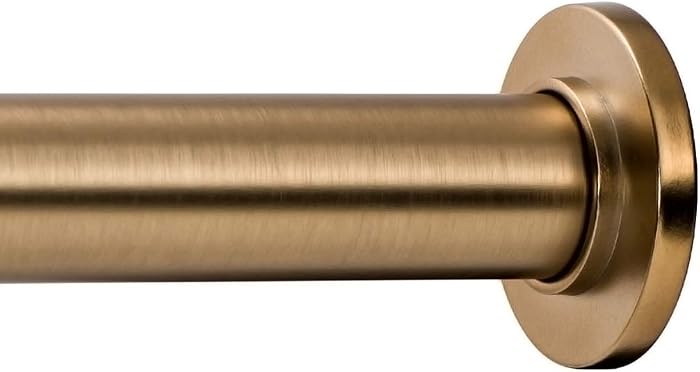
Ivilon Tension Curtain Rod

Standard tub alcoves

Our Score 95/100
Finish
Warm gold
Length Range
54 to 90 in.
Maximum Load
22 lb
Rod Diameter
1 in.
View on Amazon

The gold is what people notice first, and it earns the attention. Warm gold plating sits close enough to champagne bronze that the rod reads as part of the faucet set rather than an afterthought, and because it's plating rather than paint, it doesn't flake off at the first scratch. The finials are solid metal and noticeably heavy in the hand.

It's the rod we point most people to because it gets the three things that matter right at once. The 1-inch tube is thick enough that a heavy fabric curtain and a soaked liner don't bow it, the 54- to 90-inch range covers a standard alcove with about a foot of adjustment left over, and the 22-pound rating reflects real capacity. Nothing about it feels disposable.

Setup takes a couple of minutes and no tools: extend it past the opening, seat one rubber end, then twist the other out until both pads bite. The spring keeps pressure on both walls, which is the part that prevents the slow nightly slide, and the rubber is the non-marking kind, so glazed tile comes away clean. Wipe the tile dry first, since soapy film is the most common reason any tension rod lets go.

The limit worth knowing is at the short end. Fifty-four inches is the minimum, so a 48-inch stall or a narrow doorway is out of reach; for a standard tub alcove, that minimum is exactly what leaves the spring working instead of maxed out.

Worth Noting

  • Can lose grip on slick tile over time
Our Verdict

This is the rod we recommend for a standard alcove: a finish that passes for champagne bronze, a heavy tube that won't bow, and a span that covers 60 inches with slack.

Check Latest Price
2

ALLZONE Heavy Duty Tension Rod Best Non-Slip Hold

ALLZONE Heavy Duty Tension Shower Curtain Rod

Slip-prone walls

Our Score 94/100
Finish
Black
Length Range
42 to 83 in.
Maximum Load
20 lb
Rod Diameter
1 in.
View on Amazon

If a rod has ever come down mid-shower, start here. Of the tension rods on this list, the ALLZONE has the best record for staying where you put it, and the reason is in the ends: a twist-and-tight collar that locks the length once the rod is compressed, backed by heavy internal springs. We trust it on the slick beige tile that defeats rods relying on spring pressure alone.

The length is set with press-in buttons along the tube rather than by twisting, which is precise once you've found the right hole and fussy the first time. Expect to take it down once and re-set it a notch. Once it's locked, it doesn't creep, and the 1-inch tube doesn't flex when you push a curtain along it.

Two things to weigh before ordering. The 42- to 83-inch range covers nearly any opening you'll meet, which is more flexibility than most rods at this price. But the listed capacity is 20 pounds, below the 30-pound rods here, so a heavy fabric curtain plus a thick liner sits closer to its ceiling than you'd like. In a normal bathroom it's plenty; in a steam-heavy shower with a lined curtain, consider one of the higher-rated rods.

Worth Noting

  • Pin-and-button length setting is fiddly
  • 20-pound rating is modest for heavy curtains
Our Verdict

Buy this one if a rod has ever dropped on you: the twist lock and pins hold where plain spring rods slide, as long as your opening falls in its 42- to 83-inch range.

Check Latest Price
3

PrettyHome Curved Shower Rod Best Curved

PrettyHome Curved Shower Rod – Curved Shower Curtain Rod For Bathroom

More elbow room

Our Score 93/100
Material
Aluminum
Mounting
Wall mounted, drill
Length Range
38 to 72 in.
Maximum Load
80 lb
View on Amazon

A straight rod holds the liner a few inches from your shoulder, and in a standard tub that's the difference between a comfortable shower and one spent dodging wet plastic. The PrettyHome curves out past the tub line, and the effect is immediate: the same 60-inch opening suddenly has room to turn around in.

We think it's the better fix if you're allowed to drill. Two brackets screw into the wall, the rod telescopes from 38 to 72 inches between them, and the bases rotate so an out-of-square alcove doesn't fight you. The result is rigid in a way no tension rod on this page is, with an 80-pound rating and a 0.9mm aluminum tube that doesn't sag even with a lined curtain hanging from it.

Budget for the install, not just the rod. You'll need a 5/16-inch bit, anchors chosen for your wall, and a second pair of hands to hold the curve level while the first bracket goes in. Tile, drywall, and plaster each want a different anchor, and getting that wrong is what pulls a drilled rod out of the wall.

Worth Noting

  • Requires drilling into tile or drywall
Our Verdict

If the liner sticking to your arm is the complaint and you're allowed to drill, this curved rod fixes it more thoroughly than any tension rod here.

Check Latest Price
4

ENJOYBASICS Tension Rod Best Budget

ENJOYBASICS 1" Black Shower Curtain Rod

Tight budgets

Our Score 92/100
Finish
Matte black
Length Range
30 to 76 in.
Maximum Load
30 lb
Rod Diameter
1 in.
View on Amazon

It's the cheapest rod in this group, and it doesn't act like it: a 1-inch stainless tube, a matte black finish that photographs better than rods selling for far more, and a 30-pound rating that matches the midrange picks.

The price shows up in how it's built. The rod arrives as a telescoping center plus four splicing sections and two end caps, so you assemble it to your span rather than extending one tube. At some lengths the sections don't line up neatly with the end you're fitting, and you'll spend a minute swapping pieces to close a small gap.

For a guest bath, a rental, or a room you won't be staying in forever, that's a trade we'll take every time. The 30- to 76-inch range reaches small stalls the longer rods can't touch, assembly takes minutes with no tools, and the matte black hides the wear that shows on polished chrome. Just don't hang towels over it; the grip is right for a curtain and not much more.

Worth Noting

  • Can slip on very smooth tile
Our Verdict

A spare bathroom, a rental, or a first apartment: this is the least expensive rod here that still holds a wet liner, and it asks nothing but a twist.

Check Latest Price
5

BRIOFOX Tension Shower Rod Best for Heavy Liners

BRIOFOX Tension Shower Rod – Shower Curtain Rod 43-73 Inches Matte Black

Heavy liners

Our Score 91/100
Finish
Matte black
Material
Stainless steel
Length Range
43 to 73 in.
Maximum Load
30 lb
View on Amazon

Most tension rods end in a rubber tip the size of a quarter, and that tiny contact patch is exactly why they creep. The BRIOFOX black rod finishes in a wide, flat non-slip plate instead, so the load spreads across the face of the tile instead of digging into one spot. It's the sort of detail that never makes the front of the box and matters more than the finish does.

The rest of the build backs it up: super-thick stainless steel with a five-year non-corrosion claim, a 30-pound rating, and a matte black finish that hides water spots better than polished chrome. It's rated for tile, wood, and even wallpaper, and the 43- to 73-inch span covers a standard alcove without pushing either end of its range.

We keep it in mind for slick tile and heavy fabric curtains, where the wide plates do work that small tips can't, and 30 pounds means a curtain plus a liner isn't a gamble. One small annoyance: the instruction label comes stuck to the tube itself and takes warm water and a thumbnail to lift without scuffing the finish.

Worth Noting

  • Can loosen on damp or textured walls
Our Verdict

We keep this one for slick tile and heavy liners: the wide plates and 30-pound rating do the work that small rubber tips can't.

Check Latest Price
6

Amazon Basics Tension Rod

Amazon Basics Tension Rod

Neutral nickel finish

Our Score 89/100
Finish
Nickel
Length Range
42 to 73 in.
Maximum Load
20 lb
Rod Diameter
1 in.
View on Amazon

It's the lightest rod in this group, and it feels light in the hand: thin metal, a nickel finish with a slight patina, and rubber end caps that are kind to paint. It will hold a standard liner at 20 pounds and disappear against most fixtures, which is what most people actually want from a rod they'll never think about again. It just isn't the one we reach for first anymore.

The value math has shifted. It costs more than both budget rods here and holds less than the midrange ones, so you're paying for the name and the neutral nickel rather than extra grip. Where it earns its keep is a guest bath, a window, or a basement shower that sees light use, since there's no drilling and nothing to patch later. In a shower used every day by two people, put the money toward one of the rods with wider pads.

Worth Noting

  • Least secure grip of the tension rods here
Our Verdict

A plain nickel rod that gets the job done in a guest bath, though it gives up grip to every other tension rod on this list.

Check Latest Price
7

TEECK Spring Tension Rod Best for Small Stalls

TEECK Spring Tension Rod – Shower Curtain Rod

Small stalls

Our Score 88/100
Material
Stainless steel
Length Range
32 to 80 in.
Maximum Load
22 lb
Rod Diameter
1 in.
View on Amazon

The TEECK arrives as a stack of short tubes, and the first five minutes decide how solid it ends up: screw the sections together hand-tight, count them against your opening, and check that each joint seats flush before the rod goes up. Do that and you have a rigid 1-inch rod. Rush it and you've built a rod with a soft spot in the middle.

The range is the real reason to look at it. Thirty-two to 80 inches covers a 48-inch stall and a wide open doorway from the same box, which is more spread than most rods here manage. Everything else is modest: stainless steel, rubber pads at each end, steady spring pressure, and a listed 22-pound capacity that's honest rather than generous.

It installs without drilling and holds a lined curtain on flat tile. The weak point is the finish at the joints, where water sits and the plating is thinnest; keep an eye on the threads and dry the rod down if you want more than a couple of years out of it.

At this price we're willing to live with that, and for a small stall or an awkward long opening it's the rod that fits when nicer ones don't. Buy it for the span and the price, not for the finish.

Worth Noting

  • Rust can appear at the joints within months
Our Verdict

For a small stall or an unusually long opening on a tight budget, this is the rod that fits where the others can't; just watch the joints.

Check Latest Price
8

JS Jackson Double Curved Rod

JS Jackson Double Curved Rod – Double Curved Shower Rod

Liner plus curtain

Our Score 87/100
Material
Aluminum and zinc
Mounting
Wall mounted, drill
Length Range
44 to 70 in.
Maximum Load
20 lb
View on Amazon

Two rods on one bracket set: the outer curve carries a decorative curtain while the inner rod holds the liner, so the plastic never touches the fabric and the liner hangs closer to the tub. If your bathroom has curtains you actually like and a liner that sticks to your legs, this design solves both problems at once.

It's a wall-mounted rod, screwed into the wall and adjustable from 44 to 70 inches, with aluminum tubes and zinc brackets. The curve does the same job as the PrettyHome, pushing the liner away from your shoulders, and the second rod adds a few inches of separation that keeps the decorative fabric dry.

The install is the whole story. You need solid framing or anchors rated for a wet wall, and the included anchors are worth upgrading before you drill - the brackets themselves are fine. A fiberglass surround with nothing solid behind it is the wrong home for this rod.

What we like most is how finished it looks once it's up: the black finish and the two-rod line read as built-in rather than added on. It costs more than every other rod here, and it only earns that if you want the two-curtain setup. For a single liner, the curved PrettyHome does the same work for less.

Worth Noting

  • Needs solid framing behind the wall
  • Costs more than any other rod here
Our Verdict

The upgrade for a bathroom where the liner clings: two rods, a real curve, and brackets that hold, provided you have solid wall to screw into.

Check Latest Price

How We Tested Shower Curtain Rods

We started with more than 60 rods on the market and narrowed the field by advertised length range, mounting style, material, available finishes, and price, aiming for a mix of straight tension rods, curved rods, and drill-mounted brackets. Twelve made the cut, from budget tension rods to a double-curved model.

Each one went into a working bathroom — a tiled alcove over a fiberglass tub, a drywall alcove, and a glass-surround stall — and stayed there for the duration. We installed every rod solo with a stopwatch running, noting how well the instructions matched reality, whether the end pads gripped smooth tile as well as they gripped drywall, and whether anything scratched the surround on the way up. Then we lived with them: hanging a wet liner plus two bath towels from the middle to watch for sag, sliding the curtain open and shut daily to see how it tracked and whether a gap opened at either end, and bumping the rod on purpose the way a shoulder does in a small shower.

Once a week we checked every joint, screw, and end cap for rust and for paint lifting at the edges on the matte black finishes. We also measured the usable length against the advertised range, since a rod that only barely reaches your opening has no tension to spare. At the six-month mark we rechecked each rod for wobble and for any drift in how tight it sat, then weighed what each one cost against how it looked and held up — a plain rod that stayed put beat a nicer-looking one that needed re-tightening every other week.

How to Choose a Shower Curtain Rod

Measure the opening, not the tub

A standard alcove tub is 60 inches long, but the rod doesn't span the tub. It spans wall to wall inside the tile surround, which is usually an inch or two less, and it does that at the height you plan to mount it. Measure there, then read both ends of a rod's range instead of just the maximum.

A rod stretched to its limit has the least spring left, so a 42- to 83-inch rod sitting at 60 inches is a safer bet than a rod whose range tops out at 60. The minimum matters just as much in the other direction: a 54-inch minimum is fine for a tub alcove and useless in a 48-inch stall.

Tension or drilled?

Tension rods wedge between two walls and leave no holes, which makes them the obvious choice for rentals, tiled walls you'd rather not pierce, and anyone who wants the rod up in five minutes. They rely on friction, so surface and load matter more than they do on a screwed-in rod.

A drilled rod mounts on brackets and stays rigid for as long as the anchors hold, and the curved versions push the liner several inches away from your shoulders. If someone in the house is tired of a curtain clinging to their legs, that curve is worth a drill and a tube of patching compound.

What actually keeps a shower rod up

Three things: a large rubber pad, real spring tension, and a tube thick enough not to bow. A wet liner roughly doubles the weight the rod carries, so a 20-pound rating is a working ceiling rather than a comfortable margin once the curtain is soaked.

The wall matters as much as the rod. Flat, clean, dry tile gives the pad something to grip; a grout line, a textured surround, or a soapy film gives it nothing. Wipe the contact points with rubbing alcohol before you tension the rod, and resist hanging towels over it afterward.

Rust, finish, and the long haul

A shower is the harshest room in the house for a plated finish, and rust almost always starts at the joints and where curtain hooks rub. Stainless steel or a stated plating warranty is worth more than the word rustproof on its own, and drying the rod down now and then buys years.

Finish is the other half of the decision. Warm gold plating reads like champagne bronze and matches newer fixtures, brushed nickel disappears into a neutral bathroom, and matte black shows water spots but hides scratches.

Frequently Asked Questions

Final Verdict

Most bathrooms need one rod, and the Ivilon is the one we point people to: a warm gold finish that passes for champagne bronze, a 1-inch steel tube that won't bow under a fabric curtain, and a 54- to 90-inch span that covers a standard alcove with adjustment to spare.

If slipping is why you're shopping, the ALLZONE has the best grip in this group. If the liner keeps hitting your elbows and you can drill, the PrettyHome curved rod buys the most room for a little less money.