Best Specialty Coffee Makers of 2026

A specialty coffee maker earns its counter space only if it survives a Tuesday at 6 a.m. — groggy, half-awake, no patience for a ritual that takes three hands. The category splits between machines that hand you control and machines that hand you speed, and most of the coffee-gear disappointment in my own kitchen came from buying one when I actually wanted the other. What you're really shopping for is a repeatable cup: the same good result on a rushed morning as on a slow Sunday, without a café run in between.

Over the past eight months, my team and I worked through 12 specialty coffee makers — manual presses, glass pour-over brewers, stovetop siphons, and home espresso machines with steam wands. One thing I didn't expect: grind consistency and water temperature move the needle more than price does, so an inexpensive press with fresh beans can beat a fussy machine you dread cleaning. The picks below are the ones we kept reaching for long after the novelty wore off.

Our Top Picks

The 7 Best Specialty Coffee Makers of 2026

1

AeroPress Original Best Overall

AeroPress Original Coffee Press

Everyday brewing

Our Score 96/100
Filter
Paper micro-filter
Weight
6.4 oz
Capacity
10 oz
Brew Method
Manual press (immersion)
View on Amazon

The puck comes out in one piece. Push the plunger over the bin, rinse the tube under the tap, and cleanup is finished before the kettle has stopped ticking — the sort of detail that matters more than any specification at 6:30 in the morning. AeroPress promises a two-minute brew, and ours lands close to that: coffee in, water in, thirty seconds of steeping, thirty seconds of pressing.

That speed gets it noticed, but the control is why it's our top pick. Grind, water temperature, and steep time are all yours to change, and because it brews by immersion and pressure rather than by a pour, an ordinary kettle and an ordinary grinder both work. The paper micro-filter catches the fines that leave a French press cloudy, and the pressure shortens extraction enough that bitterness rarely shows up even when you let it steep a little long. The cup is sweet and full without grit — closer to a good batch brew than to the sludge people expect from a press.

It's also the only brewer here that lives in a drawer. At 6.4 ounces it goes in a duffel, a hotel room, or a desk, and it's the one we pack without a second thought. The limit is volume: one 10-ounce mug per press, so four people means four rounds — fine for a household of two, less fine for a dinner party.

What we appreciate most is how little ceremony it demands. No gooseneck, no glass to break, no learning curve worth mentioning. A couple of brews in, you're making better coffee than the machine it replaced.

Worth Noting

  • Paper micro-filters are an ongoing purchase
Our Verdict

We point anyone building a specialty coffee setup here first: a clean, sweet 10-ounce cup in two minutes, in a brewer that packs for travel and costs less than the glass alternatives.

Check Latest Price
2

Chemex Classic 8-Cup Best for a Big Pour-Over

Chemex Pour-Over Glass Coffeemaker

Big pour-over batches

Our Score 95/100
Filters
Chemex bonded paper, sold separately
Capacity
40 fluid ounces
Material
Borosilicate glass
Brew Method
Pour-over
View on Amazon

A Chemex makes an impression before it makes coffee. One piece of borosilicate glass, an hourglass with a waist you hold while you pour, and nothing to assemble or plug in. It's the brewer here that people leave out on the counter because it looks good there, and ours has stayed out since the first week.

It's also the biggest manual brewer in this group: 40 ounces, which Chemex counts as eight five-ounce cups and we count as four mugs, brewed in a single session. Most of its character comes from the filter. Chemex's bonded paper is thick, and thick paper holds back the oils and fine particles a metal cone lets through, so the cup is bright and clean and the fruit in a light roast comes forward where an immersion brewer would round it off.

We bring it out when there's company, because it's the only pick here that fills a pot rather than a cup, and the four-minute pour is pleasant when nobody is in a hurry. Buy a box of the bonded filters with it — Chemex specifies its own, and none come in the box. If you drink one mug and drink it fast, the AeroPress gets you there in a fraction of the time.

Worth Noting

  • Borosilicate chips and cracks when knocked
Our Verdict

We recommend the Chemex to anyone brewing for two or three who wants the cleanest, brightest cup of the manual brewers here and doesn't mind a slow pour.

Check Latest Price
3

Breville Barista Express Best All-In-One Espresso Setup

Breville BES870XL Barista Express Espresso Machine

All-in-one espresso

Our Score 92/100
Power
1600 watts
Weight
30.4 lb
Grinder
Integrated conical burr
Dimensions
12.5 W x 13.8 D x 15.9 H in.
View on Amazon

At 15.9 inches tall and 30.4 pounds, the Barista Express is the pick you measure for. If your upper cabinets sit at the usual 18 inches above the counter you have a little room to spare, but you still need clearance to fill the hopper and reach the water tank, plus a foot of depth. What that footprint buys is the most complete espresso setup here: a conical burr grinder dosing straight into the portafilter, PID temperature control, low-pressure pre-infusion, and a steam wand, all in one box.

The details are what make it livable. The tamper is built into the machine, so it's always where you left it, and the Razor tool trims the dose to the right level so you're not guessing at a flat bed of coffee. Pre-infusion wets the puck gently before full pressure arrives, which is the difference between an even extraction and a channeled one, and the PID holds brew temperature steady from the first shot of the morning to the fourth.

There's a learning curve, and the beans decide more than the settings do. A bag roasted last week tastes sweeter at every grind setting than supermarket beans roasted months ago, so start there rather than with the dial. Give it a couple of weeks of mediocre shots and the adjustments start to make sense.

Where it earns its keep is in the purchases it replaces. A burr grinder of this class and a machine with PID and pre-infusion are usually two separate buys, and here they arrive together with a steam wand. If you already own a good grinder, that math changes, and the Gaggia E24 is the machine-first alternative.

Worth Noting

  • Some units fail after a few years of daily use
Our Verdict

For a first real espresso setup with nothing else to buy, we recommend it: the grinder, the temperature control, and the wand all live in one machine a patient beginner can learn on.

Check Latest Price
4

CASABREWS CM5418 Best Compact Espresso Machine

CASABREWS CM5418 Compact Espresso Machine with Milk Frothing Steam Wand

Small kitchens

Our Score 91/100
Weight
8.6 lb
Dimensions
5.47 W x 12.28 D x 11.97 H in.
Water Tank
34 oz
Pump Pressure
20 bar
View on Amazon

Twenty bar is the number on the front of the box, and it's the least useful one. Espresso extracts at roughly nine bar; what actually helps a beginner is the pressure gauge on the panel, which shows whether a shot is running in a sensible range while you work out what the grind should feel like between your fingers.

The reason to consider it is size. At 5.47 inches wide and 8.6 pounds, it takes a corner of counter the Barista Express can't have, and the 34-ounce tank lifts off the back for filling and rinsing. The portafilter is 51mm, so baskets and tampers are the smaller standard rather than the commercial one — worth knowing before you buy accessories.

One boiler, which means the machine has to cool down between pulling a shot and steaming milk; the maker's own instructions warn against brewing straight after frothing. Steam first, then pull, or expect to stand there with a cup in your hand. No grinder is included either, so plan for one.

For a small kitchen and a first machine, that trade is worth making. It pulls a shot with real crema and the wand produces usable microfoam, and the gauge teaches you more in a month than a machine full of presets does in a year. A good burr grinder does more for this machine than a pricier machine does for stale grounds.

Worth Noting

  • Some units quit within the first year
  • 34-ounce tank needs refilling often
Our Verdict

We point small-kitchen shoppers here: it pulls a real shot with crema, fits in half the width of the Breville, and leaves room in the budget for a grinder.

Check Latest Price
5

Hario Technica Syphon Best Siphon Brewer

Hario "Technica" Coffee Syphon

Siphon showpiece

Our Score 90/100
Weight
1.5 lb
Capacity
600 ml (5 cups)
Material
Borosilicate glass, stainless steel
Dimensions
6.2 W x 4.3 D x 14 H in.
View on Amazon

Water climbs out of the lower bowl into the upper one, you stir the grounds, and a minute later the coffee pulls itself back down through the filter. The Technica is 600 ml of borosilicate sitting on a stainless stand, with its own burner, brass fasteners, and an aluminum windbreak, and it's the only brewer here that puts on a show while it works.

The cup justifies the theater. A siphon holds the water in contact with the grounds at a steady temperature and then draws it off through a cloth filter, which keeps the oils a paper filter strips out and leaves behind the sediment a French press carries. The result is full-bodied and clean at once, with the kind of clarity that makes a single-origin taste like the notes on the bag. It also brews a startlingly good pot of loose-leaf oolong, which is not a job we expected a coffee maker to handle.

Ten minutes start to finish, and the timing is on you: watch the drawdown, cut the heat, have the cups ready. That's the trade — a siphon is not a machine you start and walk away from, and it's why ours comes out on weekends instead of every morning.

Worth Noting

  • ⚠️ Upper bowl has to come off while hot
  • Cloth filter needs rinsing after each brew
Our Verdict

We recommend the Technica to anyone who wants the fullest, cleanest cup here and enjoys the ten minutes of theater it takes to get there.

Check Latest Price
6

Yama 8-Cup Stovetop Siphon

Yama Glass 8-Cup Stovetop Siphon Coffee Maker

Stovetop siphon

Our Score 89/100
Filter
Reusable cloth
Capacity
24 ounces (8 cups)
Material
Borosilicate glass
Heat Source
Gas or electric stovetop
View on Amazon

No cord, no burner: the lower bowl sits directly on your own gas or electric stove, and that's the entire heat source. The Yama is the cheaper route into siphon coffee and the bigger batch of the two here — 24 ounces, which the maker counts as eight small cups — and what it produces is a rich, heavy-bodied cup a pour-over can't touch.

The cloth filter does the same work it does in the Technica, holding the oils in and the grit out, so you get body without sludge. The pieces are listed as dishwasher safe, which is rare for glass brewing gear, and the whole brewer breaks down into a handful of parts for storage between sessions.

The catch is control. Heat comes from a stove knob rather than a burner sized to the job, so you watch the pot and lift it off at the drawdown, and an electric coil responds more slowly than gas does. It's a weekend brewer for someone who wants the ritual without paying for tabletop hardware.

Worth Noting

  • Needs a gas or electric cooktop
  • Glass bowls chip if knocked
Our Verdict

We recommend the Yama to anyone with a gas or electric stove who wants the siphon's big, rich cup for less than the Technica costs.

Check Latest Price
7

Gaggia E24 Best for Espresso Purists

Gaggia RI9380/46 E24 Espresso Machine

Espresso purists

Our Score 87/100
Valve
Three-way solenoid
Housing
Solid steel
Portafilter
58mm commercial
Pump Pressure
9 bar
View on Amazon

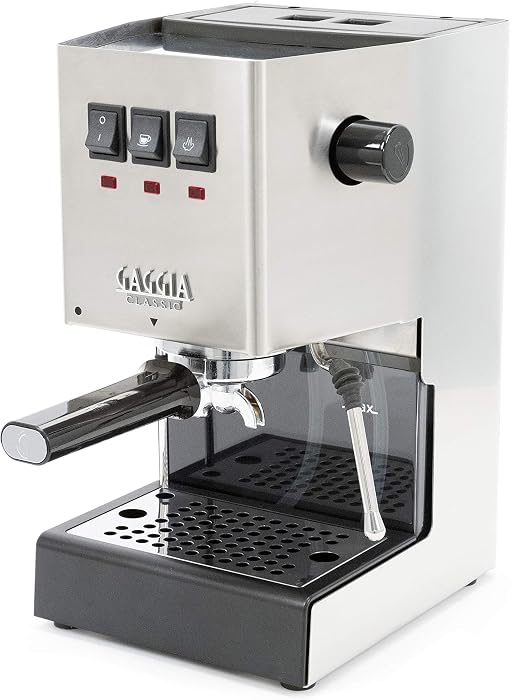
No screen, no presets, no milk button. The E24 is a steel box with a 58mm commercial portafilter, a three-way solenoid valve, a 9-bar group, and a commercial steam wand — the parts that decide what a shot tastes like, and very little else.

Those parts are the argument. The 58mm portafilter takes commercial-size baskets and tampers, so the accessories you buy for it are the ones worth keeping. The three-way valve releases pressure at the end of the shot, so the puck comes out dry instead of soupy. And the steam wand is the café style: fast, powerful, and asking for technique rather than offering a button.

It's built in Italy with a solid steel housing, and it asks more of you than the Breville does — your own grinder, your own timing, your own attention at the wand. What it gives back is a machine that behaves like the ones espresso is named after, for a household that wants to learn rather than automate. If you want a latte at the push of a button, this isn't your machine.

Worth Noting

  • Grinder is a separate purchase
Our Verdict

For the reader who wants a simple, commercial-style machine and will spend separately on a grinder, we recommend the E24: 58mm, 9 bar, and a real steam wand, with nothing between you and the shot.

Check Latest Price

How We Tested Specialty Coffee Makers in a Real Kitchen

We started by pulling together more than 40 specialty coffee makers, then narrowed the field by brew style, counter footprint, how easy it is to reorder filters and gaskets, and price, so the final group spanned budgets instead of clustering in one tier. Twelve of them came home with us and stayed on the counter for eight months.

Testing looked like actual mornings. On weekdays I brewed before work and timed everything from picking up the kettle to the first sip, because a brewer that adds four minutes you don't have is a brewer that ends up in a cabinet. Weekends were for the slower setups: weighing doses, brewing the same beans across machines, and tasting them back to back to catch bitterness, sourness, or a thin body.

We also ran specific checks. For the espresso machines, we steamed the same amount of cold whole milk each time and judged the foam by whether it poured as glossy microfoam or blew up into dry bubbles. Cleaning got logged after every use — how many parts came apart, whether spent grounds stuck to the basket, what could go in the dishwasher, how long a full descale took. And since none of this matters if the machine quits, we kept notes on seals, gaskets, glass, and anything that loosened or started leaking across eight months of daily use, along with what each one cost per cup once filters and beans were factored in.

How to Choose a Specialty Coffee Maker

Pick the Method Before the Machine

Four methods sit behind the picks here, and each asks something different of your morning. Immersion and press brewers like the AeroPress are the most forgiving: steep, press, rinse, done. Pour-over, which is what the Chemex does, rewards a slow circular pour and returns the cleanest cup of the manual group. Siphon brewers, the Hario and the Yama, are a ten-minute production with a full-bodied result and a real audience. Espresso is its own discipline: a machine, a grinder, fresh beans, and a few weeks of mediocre shots before the good ones start.

Be honest about which of those you'll still be doing in March. A machine that brews three ways often does the thing you actually care about less well than a dedicated brewer that costs less.

The Filter Decides the Cup

The biggest difference between two brewers using the same beans is what the coffee passes through. Paper, whether the Chemex's bonded sheets or the AeroPress's micro-filter, traps oils and fine particles, and the result is clarity: you taste fruit and acidity, and the cup looks like tea. Metal mesh lets those oils through for more body and a little sediment in the last sip. Cloth, used in both siphons, lands between the two — full body without grit.

Choose paper for brightness, metal for body and no ongoing supply, cloth for the middle. Just don't expect a metal filter to give you the same cup as paper with the same grind; it won't.

How Much Control Do You Want?

Every manual brewer here lets you change grind, dose, water temperature, and time. The difference is how much of that you want to manage before caffeine. The AeroPress is forgiving of an ordinary kettle and an ordinary grinder; the Chemex wants a slow, steady pour. Espresso is the opposite of forgiving: the Breville Barista Express includes a burr grinder and PID control so you can chase a repeatable shot, and the CASABREWS gives you a pressure gauge to learn by.

Spend on the grinder before the machine. Of the espresso picks here, only the Breville includes one, and a modest machine with a good burr grinder beats the reverse every time.

Measure the Space and Count the Costs

Espresso machines are furniture. The Barista Express is 15.9 inches tall and 30.4 pounds, so if your upper cabinets sit at the usual 18 inches above the counter you have a little room to spare — but you still need clearance to fill the hopper and reach the tank, plus a foot of depth. Manual brewers ask for less: the AeroPress lives in a drawer, while the Chemex wants a shelf where it won't get knocked over.

Then add what the brewer doesn't include: bonded filters for the Chemex, cloth filters for a siphon, descaler and fresh beans for any espresso machine. None of it is much per month, and all of it is more than the brewer costs if you forget to budget for it.

Frequently Asked Questions

Final Verdict

Most people should start with the AeroPress Original. It brews a clean, sweet cup in two minutes, it travels, and it costs less than any of the glass brewers here — the one purchase that turns specialty coffee into a habit instead of a project. If you want a pot to share on a Sunday morning, the Chemex is worth the four-minute pour.

If espresso is the goal, the Breville Barista Express is the complete setup when you have the counter depth and the budget, and the CASABREWS CM5418 is the same idea folded into five and a half inches.