Best Bread Makers for Gluten-Free Bread of 2026

Gluten-free bread is expensive, and a lot of it tastes like it — dry at the crust, gummy in the middle, and full of holes where the filling goes. A bread machine buys you control more than convenience: you choose the flour blend you already trust, the machine takes over the mixing and the long, single rise that gluten-free dough actually needs, and you end up with a loaf that costs a fraction of the store-bought kind and holds together when you slice it. The gluten-free cycle isn't just a white-bread setting with extra time tacked on, either.

I've baked enough crumbly bricks to be picky about which machine I trust with an expensive bag of flour. Over the past six months, my team and I have put 12 bread makers through their gluten-free programs, and the gap between the best and the rest came down to a few things: how thoroughly the paddle works a batter-thin dough, whether the loaf sizes and crust shades change anything real, and how cleanly the pan releases a bread with no gluten to hold it together. The picks below are the ones I'd keep on my counter.

Our Top Picks

The 6 Best Bread Makers for Gluten-Free Bread of 2026

1

KITCHENARM 29-in-1 Bread Maker Best Overall
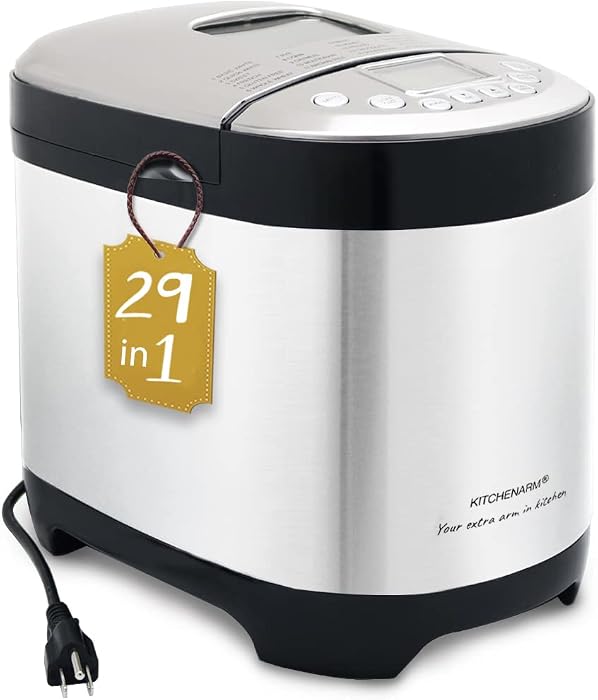
KITCHENARM 29-in-1 SMART Bread Machine with Gluten Free Setting 2LB 1.5LB 1LB

First gluten-free machine

Our Score 93/100
Programs
29
Dimensions
14.2 x 8.9 x 12 in
Loaf Sizes
1, 1.5, 2 lb
Custom Menus
4
View on Amazon

Gluten-free is a menu button on nearly every machine sold now, so the button alone tells you very little. What separates this KITCHENARM is what sits behind it: a recipe book written around the flours gluten-free bakers actually use rather than high-gluten bread flour, a gluten-free program with its own knead and rise timing, and 29 programs in total. Four of those slots are yours to program from scratch, which is more than any other machine here advertises.

Where it wins us over is repeatability. Every preset remembers your loaf size and crust color, so once a blend works you are pressing start instead of dialing in three settings again, and a menu you programmed yourself behaves the same way. Gluten-free baking carries more variables than wheat baking, and a machine that quietly removes two of them is worth more than one with a longer list of programs nobody uses.

Two pounds is the ceiling, which suits a household of two or three and gets tight if a single loaf has to cover four lunches; the Davivy's bigger pan is the answer there. The rest of the hardware is sensible: a stainless body that wipes clean after a flour cloud, 9.6 pounds that is easy enough to shift when you clean underneath, and 12 inches of height to check against your cabinet.

The detail we did not expect to lean on is the warranty. Motors and control panels are where bread machines die, and two years is more coverage than most of the machines here come with, which counts for more than an extra program or two.

Worth Noting

  • Pan and paddle are hand-wash only
Our Verdict

For most gluten-free bakers this is the machine we point to: a true gluten-free program, recipes built around non-wheat flours, and saved settings that make the second loaf a one-button job.

Check Latest Price
2

Zojirushi Virtuoso Plus Best Gluten-Free Loaf Quality

Zojirushi Bb PDC20BA Virtuoso Plus 2 Lb Breadmaker

Even gluten-free browning

Our Score 92/100
Weight
24 lb
Heating
Dual, base and lid
Capacity
2 lb
Programs
7
View on Amazon

Two heating elements, one under the pan and one in the lid, are why this is the machine we name when gluten-free results matter more than money. Most bread machines heat only from below, and a gluten-free loaf, which bakes longer and rises less than a wheat one, tends to finish pale and slightly damp on top as a result. The Virtuoso Plus browns both faces.

The twin kneading blades handle the other half of the job. Gluten-free dough has no gluten network to develop, so it behaves like a stiff batter, and two blades work it more evenly than one. Seven courses cover gluten-free, multigrain, whole wheat, salt-free, sugar-free, and vegan, and the gluten-free formulas in the book are the most dependable of any machine here — the kind you can bake once before you start adjusting.

It is also the heaviest and widest machine in this group at 24 pounds and 18 inches across, so plan a permanent counter spot rather than a cabinet shelf, and measure the space beside the fridge before you order.

Worth Noting

  • Priciest machine in this group by a wide margin
  • Paddle can be stubborn to lift out of the loaf
Our Verdict

If the loaf itself is the point and the budget is secondary, this is the one: heat from the lid and the base gives gluten-free bread an even bake most machines cannot match.

Check Latest Price
3

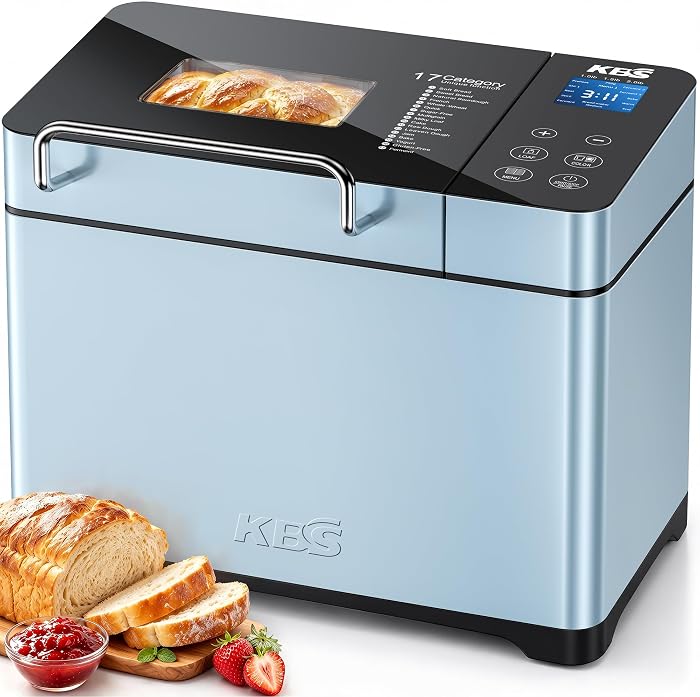
KBS 2.2-lb Bread Maker Best for Hands-Off Baking

KBS 2.2-lb Bread Maker

Hands-off add-ins

Our Score 89/100
Wattage
710 watts
Capacity
2.2 lb
Programs
17
Nut Dispenser
Automatic
View on Amazon

A ceramic bread pan and an automatic nut dispenser are two features nothing else on this list combines. The ceramic pan is claimed to release delicate gluten-free loaves more cleanly than metal nonstick, and the dispenser drops seeds, nuts, or dried fruit in at the right point in the cycle so you are not hovering over the machine with a timer.

We like it as a feature-rich second machine rather than a default. The 2.2-pound pan is the largest in the 2-pound class here, 710 watts puts it near the top of the group on power, and the glass touch panel is the easiest of these to read from across the kitchen. It also recovers from a power blink: if the outlet cuts out, it picks the bake back up within 15 minutes instead of leaving you with a half-risen brick.

The manual is where it loses us. Instructions read like a translation, some measurements are metric, and the gluten-free recipes do not always line up with the pan size, so plan on using a formula you already trust and letting the machine handle the mechanics. If you want the appliance to teach you, this is not it.

Worth Noting

  • Ceramic coating can flake with heavy use
  • Deep 15.7-inch body takes real counter space
Our Verdict

The pick for bakers who want the extras — ceramic pan, automatic nut dispenser, biggest pan in its class — and are happy to bring their own gluten-free recipes.

Check Latest Price
4

Briskind 1.5-lb Bread Maker Best for Small Households

Briskind 1.5 lb Compact Bread Maker Machine with Carrying Handle

Small kitchens

Our Score 88/100
Weight
7.8 lb
Capacity
1.5 lb
Programs
19
Loaf Sizes
1 and 1.5 lb
View on Amazon

The carrying handle tells you what this machine is for: it was built to be picked up and put away. At 7.8 pounds and roughly a foot in each direction, the Briskind is the smallest and lightest pick here, and its pan bakes either a 1-pound or a 1.5-pound loaf.

Small is often the right answer for gluten-free baking. A gluten-free loaf rises less than a wheat one, so a smaller pan gives you a better-proportioned slice instead of a wide, squat one, and a 1-pound bake is about right for two people eating through the week. The 19 programs include a gluten-free setting alongside dough, jam, and yogurt, and there is a 15-hour delay plus a one-hour keep-warm.

What we appreciate most is that nothing feels scaled down. The stainless body is solid, the controls take three steps, and the recipe book is one of the more usable ones in this group. Longevity is the open question, since panels have stopped working inside six months on some units, so buy it somewhere with an easy return window.

Worth Noting

  • Tops out at 1.5-pound loaves
Our Verdict

For two people and a small kitchen this is the one: it stores in a cabinet, bakes 1- or 1.5-pound gluten-free loaves, and comes with recipes that hold up.

Check Latest Price
5

Davivy 3-lb Bread Maker Best for Family-Size Loaves

Davivy 3 LB Bread Maker with dual paddles

Family-size loaves

Our Score 86/100
Paddles
Two, with a spare set
Wattage
850 watts
Capacity
3.3 lb
Programs
15
View on Amazon

If one bake has to feed a family for the week, this is the machine to beat: a 3.3-pound pan that Davivy sells as 3-pound loaves, two kneading paddles, and an 850-watt motor, all for less than the KBS or the Zojirushi.

Two paddles do earn their keep with gluten-free dough, which is stiff and sticky and tends to climb a single blade. The 15 programs include a gluten-free setting, and the rest of the package is generous: a 15-hour delay, one-hour keep-warm, a viewing window so you can watch the rise, and a spare pair of paddles in the box.

Why it lands here rather than higher up comes down to the record. There is far less of it than for the machines above, and the pan takes some wiggling to seat in its cradle. The loaves themselves are big, even, and properly browned; we simply have less to go on than we do with the machines that thousands of bakers have already run.

Worth Noting

  • Pan takes some wiggling to seat
  • Pan and paddles are hand-wash only
Our Verdict

For a family that finishes a loaf in two days, the big pan and twin paddles make this worth it, provided you are comfortable buying with less of a track record.

Check Latest Price
6

Culinary Chef 15-in-1 Bread Maker

Culinary chef Bread Maker Machine with Nonstick Bowl

Compact second machine

Our Score 85/100
Wattage
710 watts
Capacity
2 lb
Programs
15
Crust Settings
3
View on Amazon

Stainless steel, three crust shades, and a body that slides under a cabinet: the Culinary Chef is the plainest machine in this group, and for someone who already knows their gluten-free formula, plain is fine.

It covers the essentials. Fifteen menus include a dedicated gluten-free setting, loaves run from 1 to 2 pounds, and the nonstick bowl wipes out with a sponge. Watt for watt it is not the weakling you might assume, either: 710 watts is more than our top pick's 550, in one of the smaller bodies here.

Where it lands for us is a second machine rather than a first. The gluten-free setting is there, the pan is easy to live with, and the finish is the best-looking thing in this group, but it is a machine for someone who already knows what they want to bake.

Worth Noting

  • Booklet gives little gluten-free guidance
Our Verdict

A compact, good-looking machine with a real gluten-free setting, best for bakers who already have a formula and want something small on the counter.

Check Latest Price

How We Chose and Tested Gluten-Free Bread Makers

We started by sorting out the machines that offer a dedicated gluten-free program instead of a generic quick setting, then filtered by loaf capacity (1 to 3 pounds), pan material, and price, keeping a mix of full-size models and compact ones for smaller kitchens. That left 12 machines, which we ran for six months in our own kitchens, baking at least one gluten-free loaf a week in each — some from the included recipe booklets, some from the same bagged all-purpose blend so we had a control.

Mixing and rising were the first things we watched. Gluten-free batter looks closer to cake batter than dough, so we noted whether flour got flung into the corners of the pan, whether the paddle actually reached the edges, and whether the loaf rose evenly or sloped to one side. We weighed every cooled loaf, cut it through the center, and tasted a plain slice and a toasted one, judging the crumb by squeezing it; damp and sticky counted against a machine the same way a sunken top did.

The rest of the testing looked like ordinary baking. We set delay timers before bed and checked whether the loaf was still worth eating at 7 a.m., ran one recipe on every loaf size and crust shade to see whether the settings did anything, and followed each manual and recipe booklet once as written, noting instructions that were vague about gluten-free batter or skipped the pan-scraping step. Cleanup got timed — paddle, pan corners, rim. And we kept using each machine after the novelty wore off, which is when sticking pans and wobbly hinges start to show.

How to Choose a Bread Maker for Gluten-Free Bread

Make Sure the Gluten-Free Cycle Is More Than a Button

Gluten-free dough behaves like a thick batter, because there is no gluten network to develop and hold a rise. A real gluten-free cycle accounts for that with a gentler knead and a longer, warmer rise instead of the punch-down a wheat loaf gets. Every bread machine on this list has a dedicated gluten-free setting, so the button on its own will not narrow your choice — what sits behind it will.

Ask what the program assumes. A cycle built around blends with xanthan gum or psyllium behaves differently from one expecting a standard flour mix, and the recipes included with the machine tell you which one it is.

Match the Pan to the Loaf You Actually Bake

Gluten-free loaves rise less than wheat loaves, so pan size changes the slice you will be eating all week. A 1- or 1.5-pound pan gives two people a properly proportioned loaf; 2 pounds is the standard for three or four; 3 pounds and up suits a family that empties a loaf every couple of days.

Buying bigger than you bake is the usual mistake. Fill a 3-pound pan with a 2-pound recipe and you get a wide, flat loaf, which is the opposite of what a gluten-free formula needs. If you are between sizes, size down.

Budget for the Recipes, Not Just the Machine

Gluten-free blends and binders cost more per loaf than wheat flour, and a failed bake costs more than a cheap machine saves. Recipe support is where budget models cut corners: translated instructions, metric-only measurements, and a booklet with one token gluten-free page turn a simple bake into an afternoon of guessing.

Weigh the guidance as heavily as the hardware. A machine with a tested gluten-free chapter, as the Zojirushi and the KITCHENARM both have, is worth more to a beginner than one with a longer menu list and no formulas behind it.

Look at the Coating, the Paddle, and the Cleanup

Nonstick wears, and a gluten-free loaf is sticky enough to find every scratch. Metal nonstick is standard; ceramic pans are claimed to release more cleanly but carry their own flaking risk. Hand-washing the pan and paddle is the single best thing you can do for either coating, and a silicone spatula, never metal, gets a stubborn loaf loose.

Dishwasher-safe parts are a genuine convenience, but check the care instructions against the marketing: at least one machine here is described as both dishwasher-safe and hand-wash only.

Weigh Longevity, Footprint, and the Extras

Bread machines fail at the motor and the control panel more often than anywhere else, so buy where returns are easy and check the warranty. Two years is the best coverage on this list; one year is typical.

Footprint matters more than it sounds. These machines run from under 8 pounds to 24, and their heights differ by several inches, so measure the gap under your cabinets before you order. Set the machine a few inches back from the counter edge, too, because kneading vibration can walk it forward. A delay timer and keep-warm are the extras most people actually use.

Frequently Asked Questions

Final Verdict

After working through this group, the KITCHENARM 29-in-1 is the machine we hand to most gluten-free bakers: a genuine gluten-free program, recipes that assume you are not using bread flour, four custom menus for a blend you have dialed in, and a two-year warranty on the parts most likely to fail.

If even browning is what has been missing from your loaves, the Zojirushi's lid heater is the upgrade worth paying for. If your kitchen is small and you bake for two, the Briskind's 1.5-pound pan does the job in a fraction of the space.