Best Juicers of 2026

Every juicer makes juice; the fight is over what it costs you afterward. A centrifugal machine blasts through a bag of carrots in under a minute and hands you a foamy glass plus a bowl of soggy pulp, while a slow press takes its time, squeezes out more, and then asks you to take it apart at the sink. The right one for you is whichever set of compromises you can live with at 7 a.m. on a Tuesday.

I've been on both sides of that fence, and the machine that finally stuck with me wasn't the most powerful one — it was the one I didn't dread cleaning. Over the past eight months, my team and I have run 12 juicers through weeks of real mornings, and the differences that mattered weren't the ones the boxes brag about. The number that changes your routine more than motor wattage is the width of the feed chute: a wide one swallows a whole apple, a narrow one has you quartering and peeling until you quit.

Every pick below earns its place on yield, clog resistance, and how fast it comes apart at the sink. Some are built for speed, others for hands-free batch juicing, and a few stretch into nut milk and sorbet — none of them are the cheapest thing on the shelf, and that's deliberate.

Our Top Picks

The 8 Best Juicers of 2026

1

Breville Juice Fountain Plus Best Overall

Breville JE98XL Juice Fountain Plus

Everyday juicing

Our Score 93/100
Type
Centrifugal
Motor
850 watts
Capacity
1 liter
Feed Chute
3 inches
View on Amazon

The 3-inch feed chute is why this Breville earns the top spot. Whole apples and oranges go in with less knife work, and the 850-watt centrifugal motor gets a glass of juice moving faster than any cold press here. That speed is what makes daily juicing realistic on a rushed morning, though it is not the machine for someone who mostly juices kale and wheatgrass.

We also appreciate how little ceremony there is around cleanup. The pulp container detaches, the parts are dishwasher safe, and the cord wraps around the base instead of dangling across the counter. The juice jug's froth separator is a small detail that pays off at the pour: you get juice first, not a glass half full of foam.

The Breville is happiest with carrots, apples, citrus, and beets; leafy bunches need to be alternated with firmer produce to keep the pulp moving. It also takes up a real 14-by-12.6-inch footprint, so measure before you park it. The 1-liter jug holds enough for two generous glasses before you empty the pulp, and the two speeds give you a gentler option for softer fruit.

Worth Noting

  • Loud with hard produce
  • Wetter pulp than cold-press models
Our Verdict

For most kitchens, the Breville is the juicer we recommend: it turns whole produce into juice fast, with fewer parts and less fuss than a cold press.

Check Latest Price
2

NAMA J2 Cold Press Juicer Best Hands-Free Cold Press

NAMA J2 Cold Press Juicer

Hands-free daily juicing

Our Score 92/100
Type
Cold press
Motor
200 watts
Speed
50 RPM
Capacity
30 fluid ounces
View on Amazon

The hands-free hopper is the whole argument for the NAMA J2. Instead of standing at the chute dropping in one carrot at a time, you load a full recipe, close the lid, and let the 50 RPM auger work while you make breakfast or empty the dishwasher. That sounds like a small convenience until you have used a juicer that demands constant feeding; it is the difference between an appliance you use and one you avoid.

We think the J2 earns its premium price with that hopper, very quiet operation, and dry pulp. The 200-watt motor is modest on paper, but cold-press juicing is a torque game, not a wattage contest, and this one handles greens and hard vegetables without the racket of a centrifugal juicer. The 30-ounce juice container is generous for a household, and the included spinning brush makes cleanup less of a chore.

What you give up is speed and counter space: it is a tall 17.7-inch machine, and it takes its time. The trade is worth it if you make green juice or nut milk regularly and want less foam and less standing over the feed tube. If you mostly do a quick apple-carrot juice, the Breville is easier to justify.

Worth Noting

  • Hand-wash only
Our Verdict

The NAMA J2 is the cold press we choose when we want to load a whole recipe and walk away; it is quiet, high-yield, and worth the splurge for daily juicers.

Check Latest Price
3

Godspeeds Smoothpress Cold Press Juicer Best Value Cold Press

Godspeeds Smoothpress® Cold Press Juicer

Value cold pressing

Our Score 91/100
Type
Cold press
Motor
300 watts
Warranty
10 years
Feed Chute
6 inches
View on Amazon

The case for the Godspeeds starts with what it refuses to charge for. You get a 6-inch feed chute, a 58 RPM cold-press auger, and a 10-year warranty for less than most cold-press machines here, which is an unusual combination in a category where quiet, slow juicers tend to cost more.

The 300-watt rating looks modest, but low-speed cold pressing is about torque and time rather than raw power. The machine works through carrots and apples quietly, and the pulp comes out dry enough that a second run feels unnecessary. The wide chute is the feature we appreciate most: it turns prep into a quick scrub and trim instead of a full chopping session.

We recommend the Smoothpress to anyone who wants cold-press juice without premium spending. It is slower than a centrifugal, and the 16-inch body needs clear cabinet space, but the 10-year warranty is the detail that stands out; it is the rare case where the longest coverage does not come with the highest price.

Worth Noting

  • Small 473-milliliter juice cup
Our Verdict

The Godspeeds Smoothpress is the cold press we point to when the budget is tight: a wide chute, quiet operation, and a long warranty at a value price.

Check Latest Price
4

Canoly C16 Cold Press Juicer Best for Quiet Large Batches

Canoly 3-in-1 Cold Press Juicer C16

Large family batches

Our Score 90/100
Type
3-in-1 cold press
Motor
250 watts
Hopper
90 oz
Feed Chute
6 inches
View on Amazon

The 35-decibel rating is the headline, and for once it is the right one to lead with. We like the Canoly C16 because it is quiet enough to run before the house wakes up, and the 90-ounce hopper lets you load a family-size batch instead of feeding the machine piece by piece.

The 6-inch chute does the other half of the work. Apples and pears go in whole or nearly whole, and the detachable pulp outlet makes the chamber easier to rinse than the multi-part baskets on some cold presses. The three strainers add flexibility for juice, sorbet, and nut milk, though they also mean more pieces to wash.

This is still a cold press, so it is not fast, and the 90-ounce hopper is a lot of machine for a single glass. But it has the capacity for meal prep, the low noise for apartment living, and the 3-in-1 versatility that makes it useful beyond breakfast juice. If you mostly make one serving at a time, the smaller Ninja makes more sense; if you fill a pitcher for the week, the C16 is the calmer choice.

Worth Noting

  • Hand-wash only
  • Tall 17.3-inch body
Our Verdict

The Canoly C16 is the quiet, big-batch cold press for a family that wants to load a hopper once and not hear about it from the next room.

Check Latest Price
5

Ninja NeverClog JC151 Best Compact Cold Press

Ninja NeverClog Cold Press Juicer

Small kitchens

Our Score 89/100
Type
Cold press
Motor
150 watts
Pulp Capacity
36 fluid ounces
Juice Capacity
24 fluid ounces
View on Amazon

At 15.93 inches tall and 7.15 inches wide, the Ninja JC151 is one of the few cold-press juicers here that genuinely disappears under a cabinet. The 24-ounce juice jug and 36-ounce pulp bin are sized for a couple, not a cafe, and the two pulp filters let you choose a clearer or heartier glass.

The rest of the design is built for small-space life: the parts are dishwasher safe, assembly is straightforward, and the reverse function gives you a way out when something jams. The 150-watt motor is not a power statement, but it turns slowly and quietly enough for an apartment kitchen.

The trade-off is yield. This is not the juicer that squeezes the last drop from a pile of greens, and the narrow feed opening means apples and big carrots need trimming. Feed it steadily and keep fibrous produce in check; the compact auger prefers smaller pieces.

We recommend the JC151 for renters, small kitchens, and anyone who makes a glass or two at a time. Its size, dishwasher-safe parts, and two pulp filters make it a genuinely useful compact machine. If you want to drop in whole apples or juice a week's worth at once, spend more on a wide-chute model.

Our Verdict

The Ninja NeverClog JC151 is our pick for a small kitchen and a small batch, especially if you want to choose how much pulp ends up in the glass.

Check Latest Price
6

Magic Bullet Mini Juicer Best Budget Juicer

Magic Bullet Mini Juicer with Cup

Single servings

Our Score 88/100
Type
Centrifugal
Motor
400 watts
Juice Cup
16 fluid ounces
Feed Chute
2 inches
View on Amazon

At 11.5 inches tall and 6 inches wide, the Magic Bullet Mini is small enough to leave on the counter without giving up the cutting board. The 16-ounce cup is the tell: this is a single-serve juicer, not a family machine, and that focus is exactly why it fits a small kitchen.

We recommend it for a dorm, a small apartment, or a weekday celery-and-apple juice when you do not want to haul out a big machine. The 400-watt motor is modest but matched to single servings, and the twist-on lid plus silicone spout cap mean you can juice, cap, and go without dirtying another glass. It is simple to assemble and rinse, which matters more here than raw power.

It is not the juicer for meal prep or tough greens. But those are fair trade-offs at the budget end: you get a compact, easy-to-live-with machine that makes one fresh glass at a time. If you need to juice for a family, look at the wide-chute cold presses instead.

Worth Noting

  • Small 2-inch feed chute
  • Durability is inconsistent
Our Verdict

The Magic Bullet Mini is the juicer we reach for when counter space is tight and one fresh glass is the goal; it is inexpensive, simple, and easy to rinse.

Check Latest Price
7

AMZCHEF Cold Press Juicer Best for Big-Batch Juicing

AMZCHEF Cold Press Juicer

Big-batch juicing

Our Score 87/100
Type
3-in-1 cold press
Motor
600 watts max
Hopper
90 oz
Feed Chute
6.5 inches
View on Amazon

The AMZCHEF's 6.5-inch reversible chute is the feature that separates it from the usual cold-press crowd. Built-in cutting blades start breaking down apples and carrots as they drop, and the 90-ounce hopper lets you load a family-size batch without standing over the feed tube. That is a real time saver if you juice for more than one person.

The 3-in-1 setup adds juice, nut milk, and sorbet strainers, and the 600-watt max motor gives it more headroom than the budget cold presses here. Assembly is straightforward, and the two-speed control is useful when you move from soft fruit to dense roots. The extra strainers are flexibility, not decoration.

We recommend it for a family that wants maximum capacity for the money, with one caution: durability has not inspired the same confidence as the NAMA or Godspeeds over the long haul. The motor and plastic parts are the weak points to watch, which is why this one stays a step below our top cold-press picks. It is at its best when you fill the hopper once and work through a week of juice, not when you make a single glass.

Worth Noting

  • Three strainers add cleanup steps
Our Verdict

The AMZCHEF is a strong choice for families who want a wide cutting chute, a 90-ounce hopper, and three strainers without paying premium cold-press money.

Check Latest Price
8

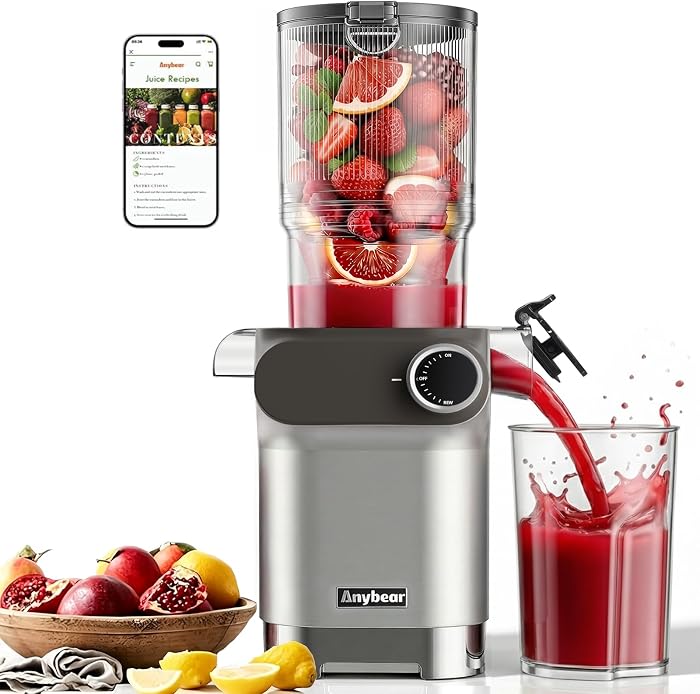
Anybear Cold Press Juicer Best for Warranty-Minded Buyers

Anybear 200W Cold Press Juicer

Warranty-minded buyers

Our Score 86/100
Type
Cold press
Motor
200 watts
Warranty
5 years
Feed Chute
4.3 inches
View on Amazon

The five-year warranty is the first thing we noticed about the Anybear, and in a category where plastic parts and motors are the usual weak points, that is not a throwaway perk. The 4.3-inch chute lands in the middle of this group: wider than the old 3-inch centrifugals, narrower than the 6-inch whole-fruit machines, so it cuts some prep without pretending you can drop in a whole head of cabbage.

The rest of the design is deliberately simple. The 200-watt motor turns the auger at 65 RPM, the feed chute is made from Tritan, and the one-piece stainless filter is easier to rinse than the multi-part mesh baskets on some cold presses. We like that combination for someone who wants cold-press juice without a countertop puzzle.

The compromise is pace and batch size. It is a single-auger cold press with a mid-size chute, so a big family batch takes longer than it does in the 90-ounce hoppers, and the 15.3-inch body still needs clear cabinet space. For a couple or a small household, that is a reasonable trade for the simpler cleanup and the warranty.

We recommend the Anybear to the buyer who values a long warranty and a straightforward cleaning routine more than maximum speed or capacity. It is not the fastest or the biggest machine here, but the design is sensible, the materials are a step above the cheapest plastic, and the five-year coverage gives it a longer safety net than most. If you juice daily for a family, go bigger.

Worth Noting

  • Hand-wash only
Our Verdict

The Anybear is a sensible mid-size cold press for buyers who want a long warranty, a Tritan feed chute, and a simpler one-piece filter.

Check Latest Price

How We Tested a Dozen Juicers

We started with spec sheets and customer reviews, narrowing a field of more than 40 machines by feed chute size, motor type, capacity, and price, then bought 12 across the centrifugal and cold-press camps — compact countertop models, large-capacity hoppers, and a few 3-in-1 units that also claim to make nut milk and sorbet.

Testing ran for eight months, with each juicer living on a real kitchen counter and working the two situations these machines are actually bought for: the weekday rush and the weekend batch. We timed assembly out of the box and every morning after, then ran the same produce through each one — apples, carrots, kale, celery, beets — weighing what went in and what came out, so yield comparisons were by the ounce rather than by the glass.

For clogging, we fed fibrous celery and kale back to back and counted how often we had to stop and clear the pulp, then squeezed the spent pulp to see how wet it still was. Over the months we watched augers, baskets, and mesh screens for hairline cracks, staining, and wear, and checked whether parts still seated as tightly in month eight as they did in week one.

Cleaning was timed every single time: how long the breakdown took, how many parts came off, whether fiber got wedged in the screen, and which pieces went through the dishwasher without clouding. Value came last — we weighed what each machine cost against its yield, its cleaning time, and how often it stalled.

How to Choose a Juicer for Your Counter

Decide Between Centrifugal and Cold Press

Centrifugal juicers spin a basket at high speed; they are fast, loud, and happiest with firm fruit and roots. Cold-press machines, often called slow juicers, crush produce slowly with an auger; they are quieter, leave drier pulp, and handle greens and nut milk better, but they cost more and take longer. We reach for a centrifugal like the Breville for a quick apple-carrot juice and a cold press like the NAMA when greens or a week of juice is the goal.

Match the Chute to Your Prep Time

Feed-chute width decides how much knife work happens before juicing. A 3-inch chute takes whole apples and oranges with little trimming; a 2-inch chute is fine for single servings but means cutting carrots and apples down. Wide 6-inch chutes shorten prep, but they are not blenders: fibrous produce still needs to be fed steadily, and oversized pieces can stall the auger. If you hate chopping, pay for the wide chute; if you mostly juice small produce, save the counter space.

Size the Batch, Then the Footprint

Capacity is two different numbers: the hopper or feed area determines how much you can load at once, while the juice container sets how many glasses you pour before emptying. A 90-ounce hopper suits meal prep; a 16-ounce cup is a single serving. Height matters just as much. The models here run from 11.5 to 17.7 inches tall, so measure from your counter to the upper cabinet before choosing a spot, especially if the juicer will live on the counter.

Plan for Cleaning and Noise

Cleanup is the habit that decides whether a juicer earns its counter space. Dishwasher-safe parts and a detachable pulp bin make a centrifugal easier to live with; cold presses often have more pieces, and some are hand wash only. Noise is the other daily cost. Centrifugals are loud by design, while the quietest cold presses run near a conversation. If you juice before dawn in an apartment, spend for the quiet machine; if you juice at lunch and rinse immediately, speed matters more.

Check Durability and Warranty Before You Pay

Juicers live with plastic chambers, mesh filters, and motors, so the warranty is part of the purchase, not fine print. A one-year warranty is common; a five- or ten-year warranty signals more confidence and gives you a path if a part fails. We also look at whether replacement parts and a simple filter design are available. If you plan to juice daily, pay for the longer coverage and simpler assembly; if you juice occasionally, a basic model with easy returns is the lower-risk choice.

Frequently Asked Questions

Final Verdict

For most people, we recommend the Breville Juice Fountain Plus. It is fast, takes whole produce, and has fewer parts to fight with than a cold press, which makes it the easiest juicer to use often.

If you juice greens or want to load a hopper and walk away, the NAMA J2 is the better long-term buy; the Godspeeds Smoothpress is the value cold press. Start with the kind of juice you make most, not the biggest motor.